- Best months
- July and August
- Getting there
- Boat or canoe from a public landing
- Bring
- Life jackets, shade, water and a trash bag
- When
- June, July, August
Beaches the river builds
The Mississippi carries a great deal of sand. As water levels drop through early summer, that sand appears in long bars and broad beaches along islands, at the heads of side channels and on the inside of bends. Between Red Wing and La Crosse, much of the river's floodplain lies within the Upper Mississippi River National Wildlife and Fish Refuge, and on summer weekends its sandbars fill with people who have come by boat to swim, picnic, fish and sometimes camp.
No two summers are the same. A high-water spring can bury familiar beaches or move them downstream. A dry summer can expose sand where there was water the year before. The river decides, and part of the fun is finding which bars are good this season.
Picking a sandbar
Most sandbars can be reached only by water, from a public boat landing or canoe access in one of the river towns. The best spots for a quiet afternoon are usually off the main channel, along side channels and backwaters where traffic is lighter and the water is calmer. Look for a gentle slope into the water, firm sand and some shade from the willows and cottonwoods behind the beach.
Give the river room. A bar right on the main channel gets the full force of passing wakes and the noise of passing boats, and the bottom often drops off sharply where sand meets the channel. Bars facing a backwater are calmer and better for swimming and for children.
Not every sandbar is open to everyone. Some areas of the refuge are closed seasonally to protect wildlife, and some islands are private. Respect posted signs and closures.
Current, wakes and drop-offs
The Mississippi looks calm on a summer afternoon. It is not. Even in low water, the current in and near the main channel is strong enough to carry a swimmer away from the bar faster than most people can swim back. The water is often murky, so you cannot see the bottom, and the edge of a sandbar can drop from knee-deep to well over your head in a single step.
- Wear a life jacket in the water, especially near the channel. Strong swimmers drown on the river every year.
- Swim on the calm side of the bar, away from the channel, and never try to swim across the river.
- Watch children every minute they are near the water.
- Pull your boat well up onto the sand and tie it off. A passing wake or a slow rise in the river can float a beached boat away.
- Watch for wakes from towboats and large pleasure boats. They can roll a long way up a shallow beach and knock a small child over.
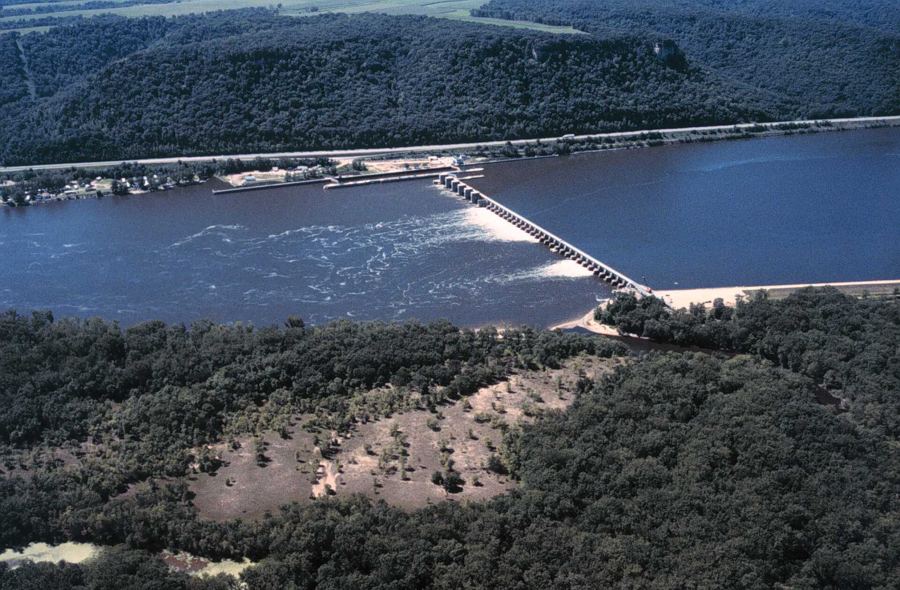
Stay out of the main channel when you swim or paddle, and keep well clear of moving tows. A towboat pushing barges cannot stop or swerve, and the pilot may not see anyone in the water ahead.
 Further along the riverLocks, dams and barges
Camping on the river
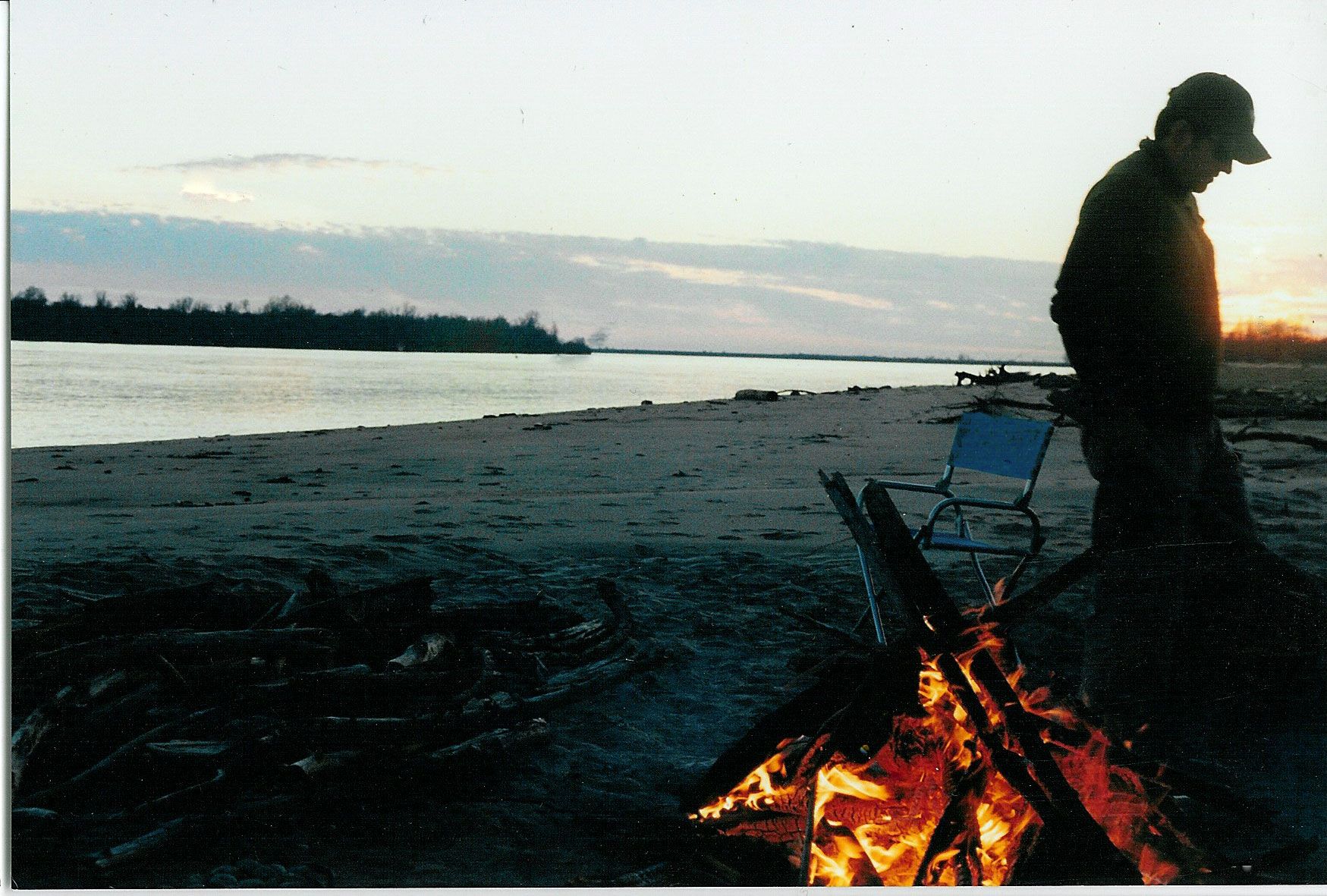
Sandbar camping is one of the river's real pleasures: a fire of driftwood at dusk, the sound of the current and the lights of a tow sliding past in the dark. In much of the refuge, camping on sandbars and islands is allowed, but there are rules on where you can camp, how long you can stay, fires and what you must pack out. Those rules are set by the refuge and can change, so check the current regulations before you go.
Weather can change quickly on the river. Summer storms come over the bluffs fast, often from the west, and an exposed sandbar is no place to be in lightning or high wind. Keep an eye on the sky, check the forecast, and know where you would go if a storm came through. Camp well above the water's edge and keep an eye on the river level, which can rise overnight after heavy rain upstream.
If fires are allowed where you are, keep them small, build them on bare sand below the vegetation line, use only dead driftwood and drown them completely before you leave or sleep.
Leaving no trace
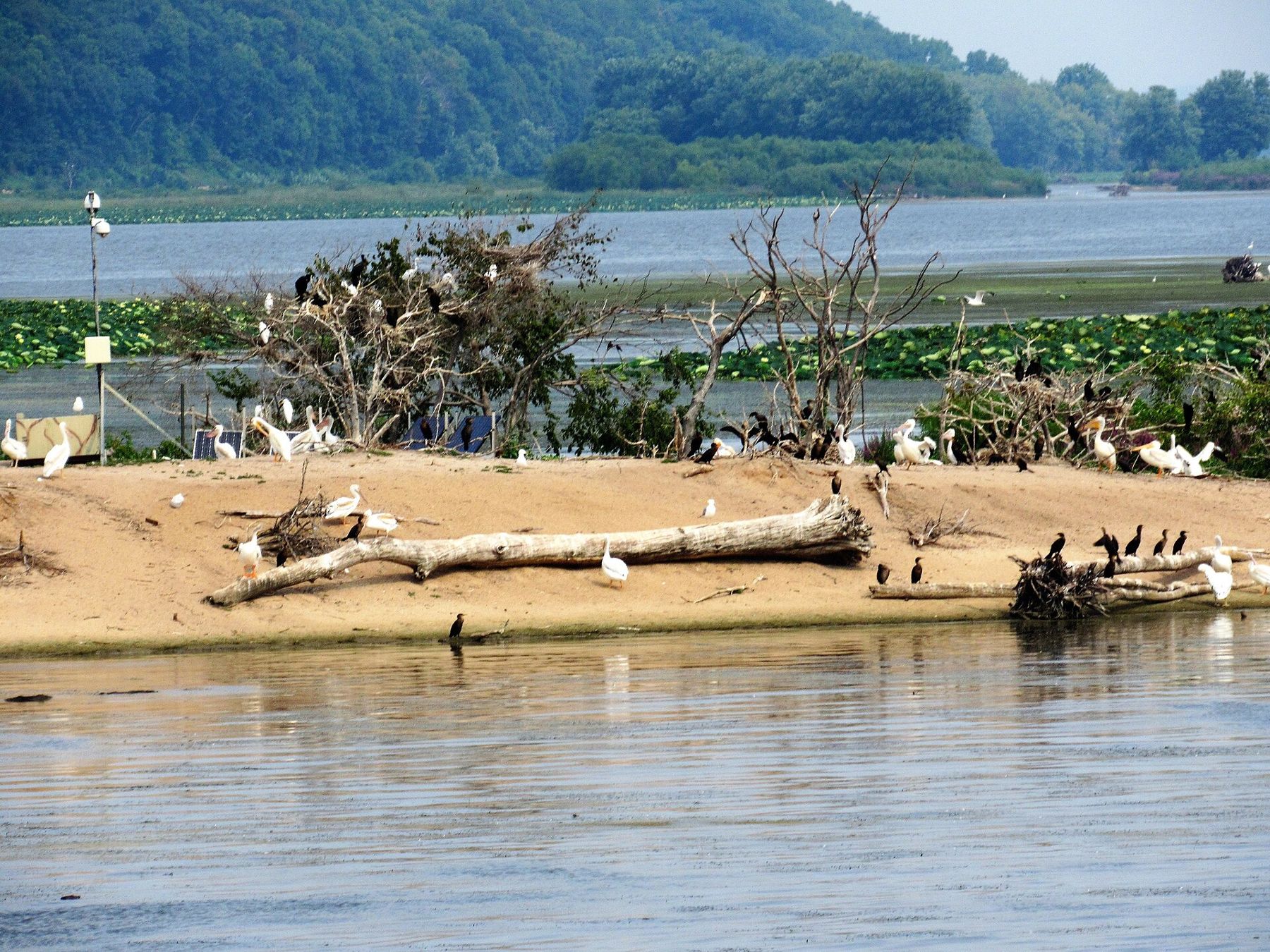
The river's beaches are shared by thousands of people each summer and by the wildlife that uses them the rest of the time. White pelicans, gulls, terns and other birds rest and feed on sandbars, and some islands are important nesting areas. Keep your distance from groups of birds and do not let dogs chase them.
- Pack out everything you bring, including food scraps, bottle caps and cigarette ends.
- Bring a portable toilet or waste bags and pack out human waste. On a busy beach there is nowhere else for it to go.
- Do not cut live trees or branches. Use only dead driftwood for any fire.
- Leave the sandbar cleaner than you found it.
Finding a way onto the water
If you do not have a boat, a canoe or kayak is a good way to reach sandbars on the backwaters, where the water is calmer. Public landings in towns on both banks, from Red Wing down to La Crosse, give access to the river, and the backwaters around Trempealeau are good water for paddlers. Plan short trips, paddle with someone else, and remember that coming back upstream against the current is much slower than going down.
A summer day on a sandbar asks little of you: shade, water, sunscreen, a life jacket for everyone and a bag for the trash. Go early in the day before the beaches fill, keep an eye on the weather, and leave in time to be off the water before dark.
Whose pictures these are
- FarragutfulCC BY-SA 4.0
- Gary BridgmanCC BY 2.5