- Best months
- Late September to late October
- Getting there
- US-61 and Wisconsin Highway 35, both banks
- Bring
- Layers, sturdy shoes, binoculars for the hawks
- When
- September, October
The bluffs in autumn
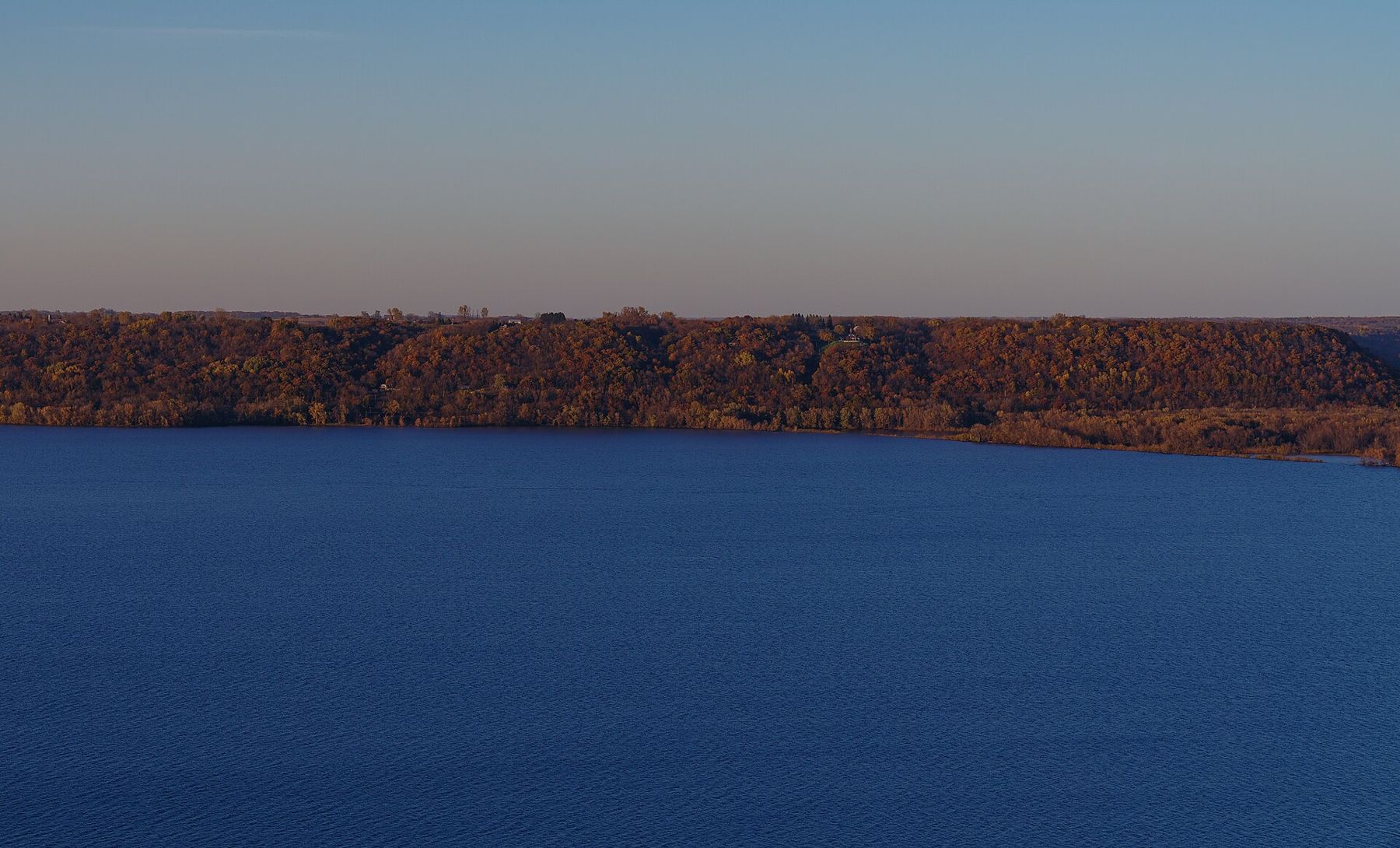
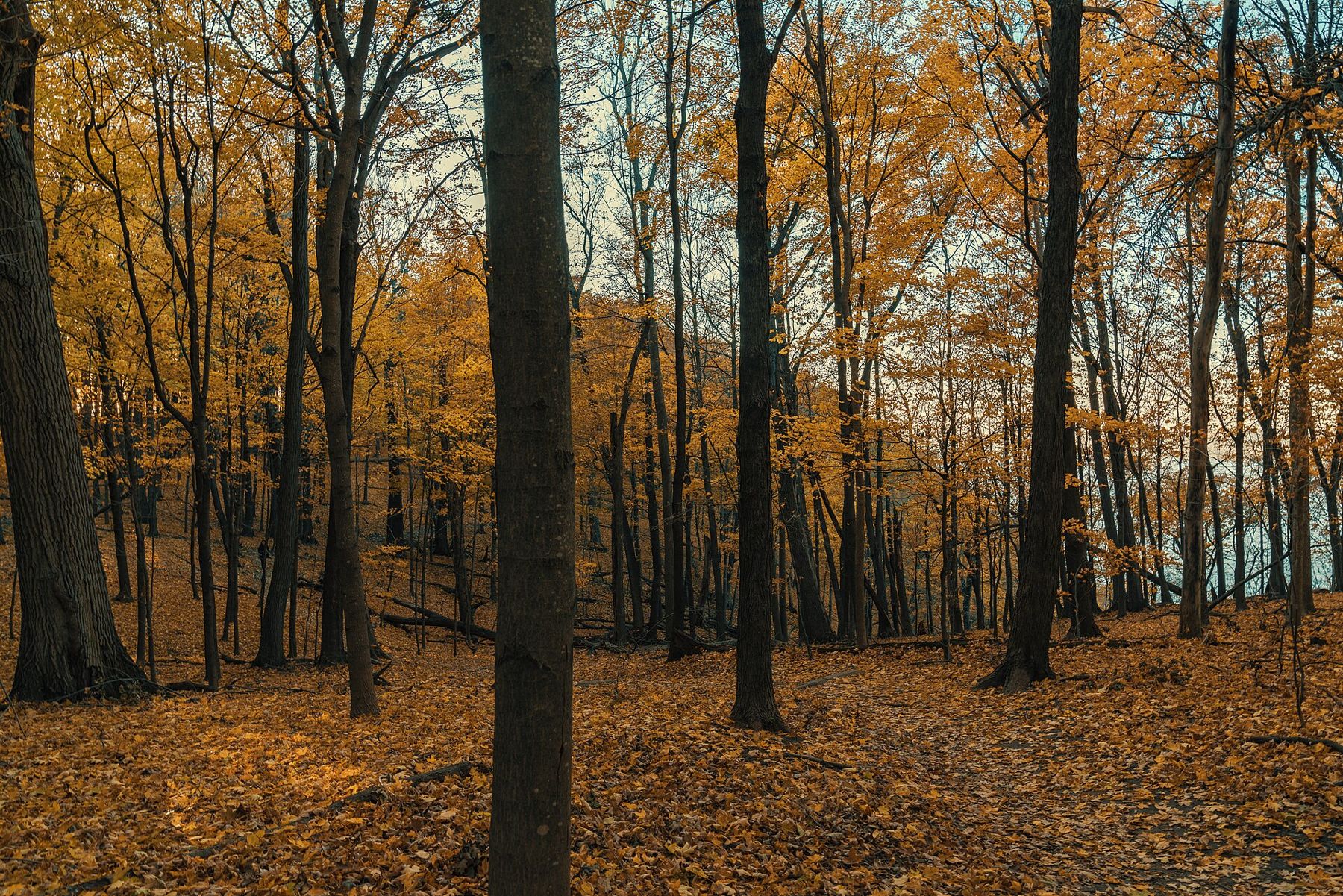
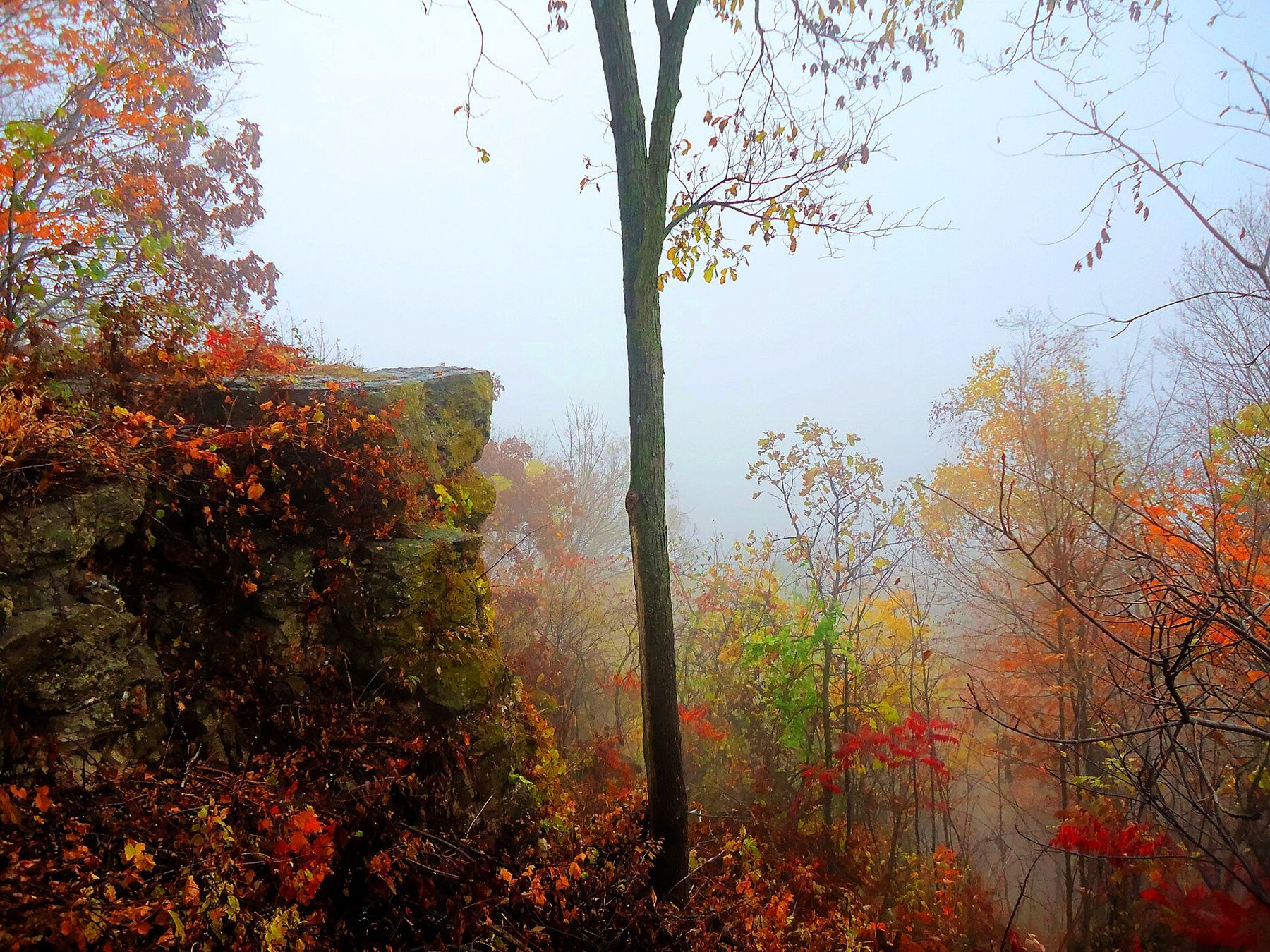
The bluffs along the Mississippi between Red Wing and La Crosse are covered in mixed hardwood forest: maples, oaks, basswood, hickory, birch and aspen, with sumac and prairie grasses on the open, sunny slopes. In autumn that mix turns colour in stages, so the valley does not change all at once. It shifts over several weeks, with each kind of tree taking its turn.
The river doubles the effect. From an overlook you see colour on the bluffs on both banks, the water between them and often the reflection of the far shore. On a still, clear October morning the view across the river is the best reason to be in the valley all year.
A rough timetable
Exact timing changes every year with the weather. A warm, dry September or an early frost can move everything by a week or more. But the order is fairly steady.
- Mid to late September: sumac on the open slopes turns scarlet first, along with some vines and early maples in low, cool spots.
- Late September to early October: maples and aspens begin to turn in earnest, birches and basswoods go yellow, and the bluffs start to look patchy with colour.
- Early to mid October: often the peak, with maples at full colour among oaks still holding green or just turning.
- Mid to late October: oaks take over, turning the bluffs russet, bronze and deep red. Many people skip this stage, but the oak colour on the bluffs lasts and can be the richest of the season.
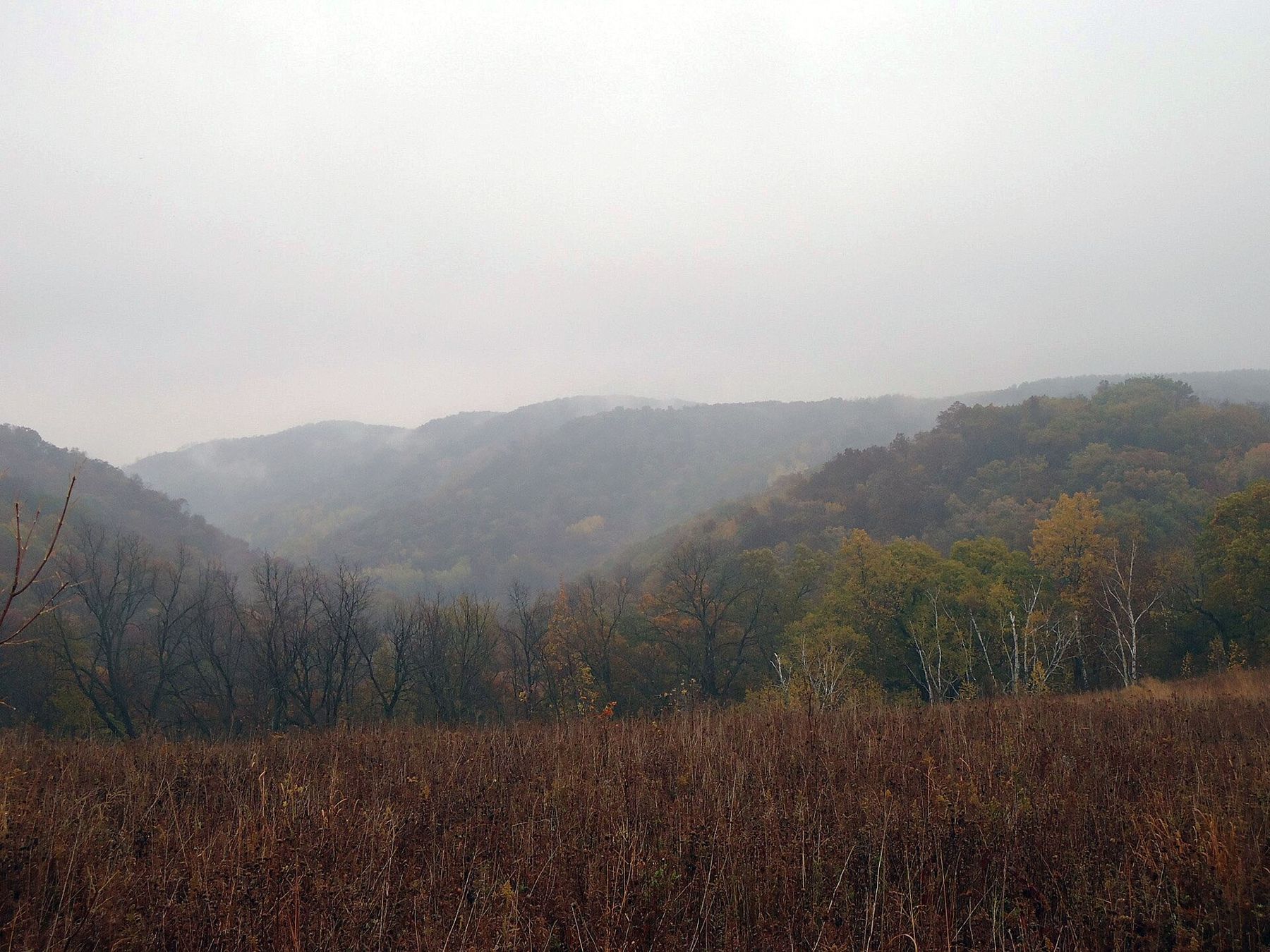
North-facing slopes and cool side valleys tend to turn earlier than sunny south slopes. Both state natural resources departments post fall colour reports through the season, and they are worth checking before you go.
Overlooks on the Minnesota bank
On the Minnesota side, US-61 follows the river and passes some of the best viewpoints in the valley. At the north end, Barn Bluff rises right over downtown Red Wing, and a short, steep climb takes you to views up and down the river. Frontenac State Park, between Red Wing and Lake City, has bluff-top trails that look over Lake Pepin to the Wisconsin bluffs, one of the widest views in the valley.
Farther south, the Reads Landing Overlook on US-61 is a quick roadside stop. At Winona, Garvin Heights looks down on the city, the river and the bluffs across in Wisconsin. Great River Bluffs State Park, south of Winona, has trails to overlooks high above the river and some of the best fall colour in the region on its slopes and goat prairies.
 Further along the riverOrchards and cider on both banks
Overlooks on the Wisconsin bank
Across the river, Wisconsin Highway 35 runs below the bluffs and through the river villages. Maiden Rock Bluff State Natural Area, above Maiden Rock on Lake Pepin, has a trail to the top of a high bluff with views across the lake to Minnesota. At Alma, Buena Vista Park sits on the bluff above the town and looks over Lock and Dam 4 and the river below.
Near Trempealeau, Perrot State Park's Brady's Bluff has a steep trail to a view over the river and the wildlife refuge, and Fountain City climbs its own bluff a few miles upriver. At the south end, Grandad Bluff above La Crosse has a wide view over the city, the river and the hills of three states, and you can drive to the top. From any of these, the Minnesota bluffs across the water are part of the picture.
Many of these trails are steep and rocky, and wet leaves make them slick. Wear good shoes, take your time, and stay back from bluff edges, where there are often no railings.
Weekdays and early mornings
Peak colour weekends draw a lot of visitors to the river towns and the scenic highways, and parking at popular overlooks can fill by late morning. If you can, come on a weekday. If you can only come on a weekend, start early. Morning light is often the best for photographs, and on cool, still mornings fog lifts from the river and the side valleys as the sun warms them.
A good plan is a loop that runs one bank in the morning and the other in the afternoon, crossing at one of the bridges at Red Wing, Wabasha–Nelson, Winona or La Crosse. That way you see the far bluffs in better light from each side. State parks require a vehicle permit or pass. Check before you go.
Hawks on the move
Autumn is also when hawks travel south along the river. The bluffs create rising air currents that migrating raptors use to gain height with little effort, and the valley acts as a natural guideline for their journey. Broad-winged hawks can pass in large groups in September, and red-tailed hawks, bald eagles and others follow through October and into November.
You do not need a special site to see them. A bluff-top overlook on a clear day with a light northwest wind is often enough. Bring binoculars, look up as well as out, and watch for hawks circling in rising air before they peel off south down the valley. After the colour has gone, the river's other autumn show begins on the backwaters, where tundra swans and ducks gather in late October and November.
Whose pictures these are
- Tony Webster from Minneapolis, Minnesota, United StatesCC BY 2.0
- Yinan ChenPublic Domain