- Best months
- September and early October
- Getting there
- US-14/61 to La Crescent, Highway 35 south
- Bring
- Cash, a cooler, and shoes for orchard grass
- When
- August, September, October
Apple country between the bluffs
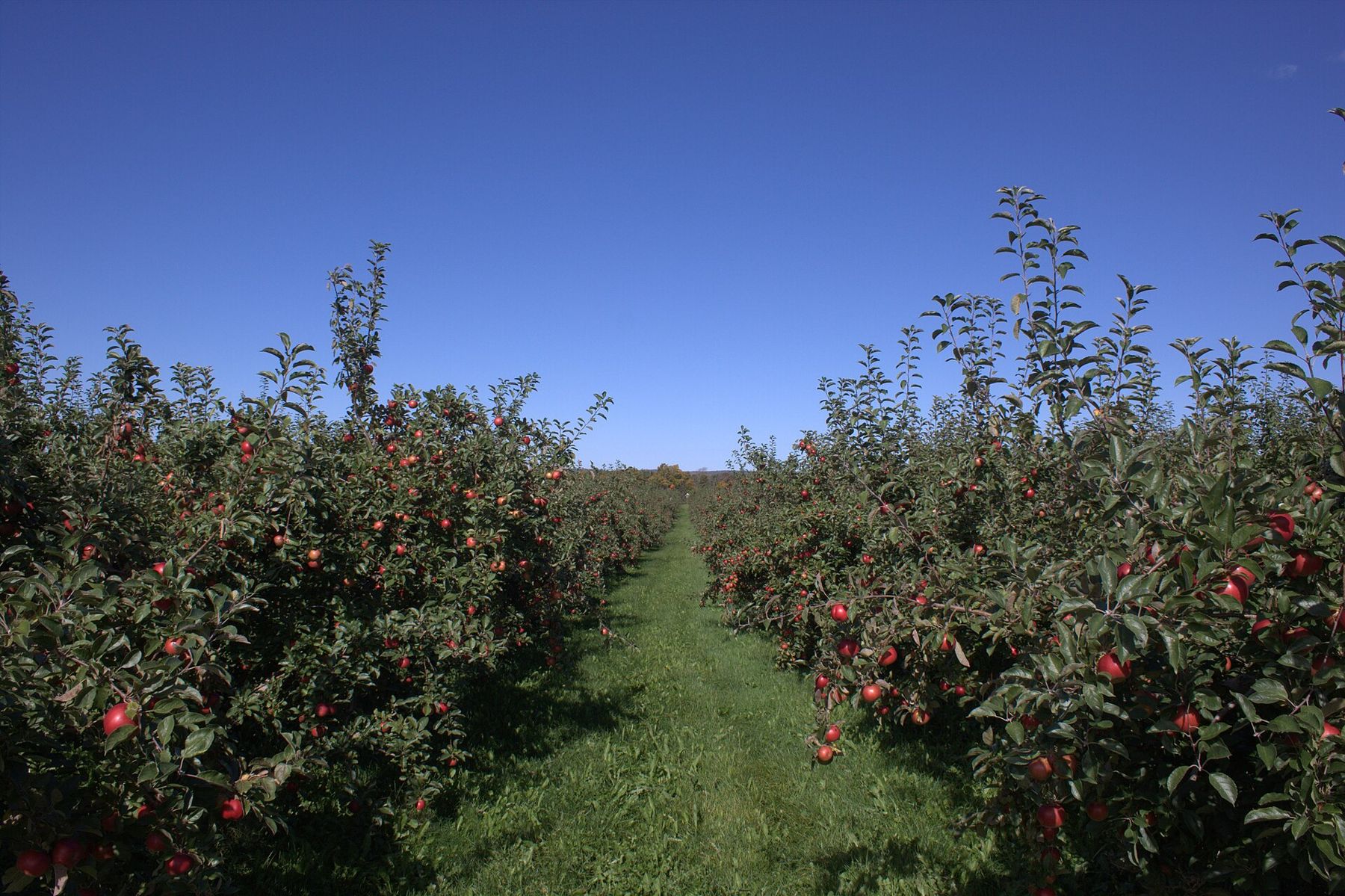
The Mississippi bluff country is good apple land. Warm days and cool nights in late summer help apples colour and sweeten. The upland soils on the ridges drain well, and the river valley softens the worst of the cold. Orchards spread across the ridges and side valleys on both banks, and from late summer into autumn roadside stands and farm markets open up along the highways and back roads.
The best-known apple country in this stretch is around La Crescent, across the river from La Crosse. The town calls itself the apple capital of Minnesota, and the Apple Blossom Drive, a scenic route along the bluff tops above it, runs past orchards that are white with blossom in May and heavy with fruit in September. The other cluster is around Lake Pepin, where orchards sit on the ridges on both the Minnesota and Wisconsin sides, often with views down to the water.
Apples bred in Minnesota
Minnesota's winters are hard on fruit trees, and many varieties from milder places did not survive them. For more than a century, the University of Minnesota has bred apples that can. Several of its varieties are now grown far beyond the state, and the bluff-country orchards grow many of them.
- Honeycrisp is the most famous. Released by the university in 1991, it is known for an explosive, juicy crunch and a balance of sweet and tart. It usually ripens in September.
- Haralson, released in the 1920s, is a firm, tart apple that keeps well and is a long-time favourite for pies.
- SweeTango, a newer variety with Honeycrisp as a parent, is crisp and sweet and ripens earlier, often in late August.
- Honeygold and Fireside are older university varieties, sweet and mild, still grown in many orchards.
Not every orchard grows every variety, and what is ripe changes week to week. Ask at the stand what is being picked that day. Early apples arrive in August, most varieties come in September, and late keepers carry on into October.
Picking etiquette
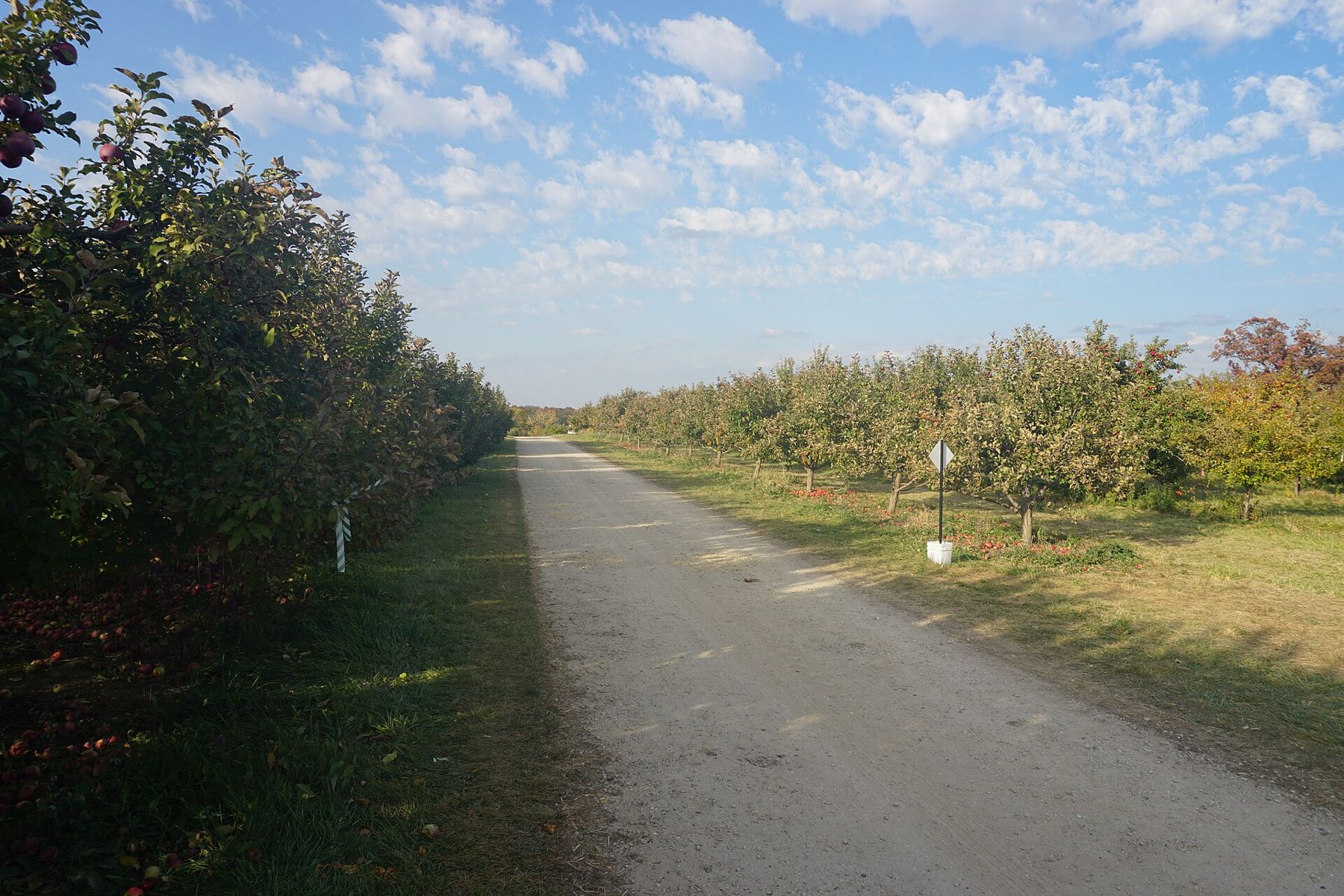
Many orchards in the area offer pick-your-own on some days and for some varieties. It is a good way to spend a morning, but you are a guest on a working farm. A few simple habits keep orchards open to the public.
- Pick only in the rows and from the varieties the orchard tells you are open.
- To pick an apple, lift it up and twist it gently off the branch. Do not pull or yank. That breaks off next year's fruit buds.
- Do not shake branches, climb trees or use ladders unless the orchard provides them.
- Leave windfalls on the ground unless you are told otherwise, and do not throw apples.
- Ask before you taste, and pay for what you eat.
- Keep children with you and dogs at home or in the car unless the orchard says they are welcome.
Hours, prices and pick-your-own days vary by orchard and by year, and a bad frost or a poor season can close picking early. Check before you drive out.
 Further along the riverFrontenac and Lake City on Lake Pepin
Fresh cider
Autumn is cider season. In this region, cider usually means fresh apple juice, pressed from a blend of apples and sold cloudy and sweet, not the fermented drink. Many orchards press their own, and the taste changes as the season goes on and the blend of varieties shifts. Early cider can be bright and tart. Late-season cider is often deeper and sweeter.
Some fresh cider is sold unpasteurised and carries a warning label. Pregnant women, young children, older adults and anyone with a weakened immune system are usually advised to choose pasteurised cider. Either way, keep it cold and drink it within a week or so. If you are driving home a long way, a cooler in the car is worth bringing.
Pies, bakes and taking apples home
Orchard stands across the region sell pies, bars, apple crisp and caramel apples alongside the fruit, and stopping for a slice is part of a fall drive. If you would rather bake your own, ask which apples hold their shape in the oven. Haralson is a long-standing pie apple, and many bakers like to mix a tart, firm variety with a sweeter one for depth.
Apples keep best cold and humid, in the refrigerator crisper or in a cool spot in the house. Store them away from other produce, since ripening apples speed up the ripening of vegetables around them. Handle them gently. Bruised apples spoil faster and make the ones around them go soft.
Firm, late varieties such as Haralson keep for weeks in cold storage, while softer early apples are best eaten within days. If you buy in bulk, sort through the bag when you get home and use any marked fruit first, in sauce, crisp or a pan of baked apples.
Planning an orchard day
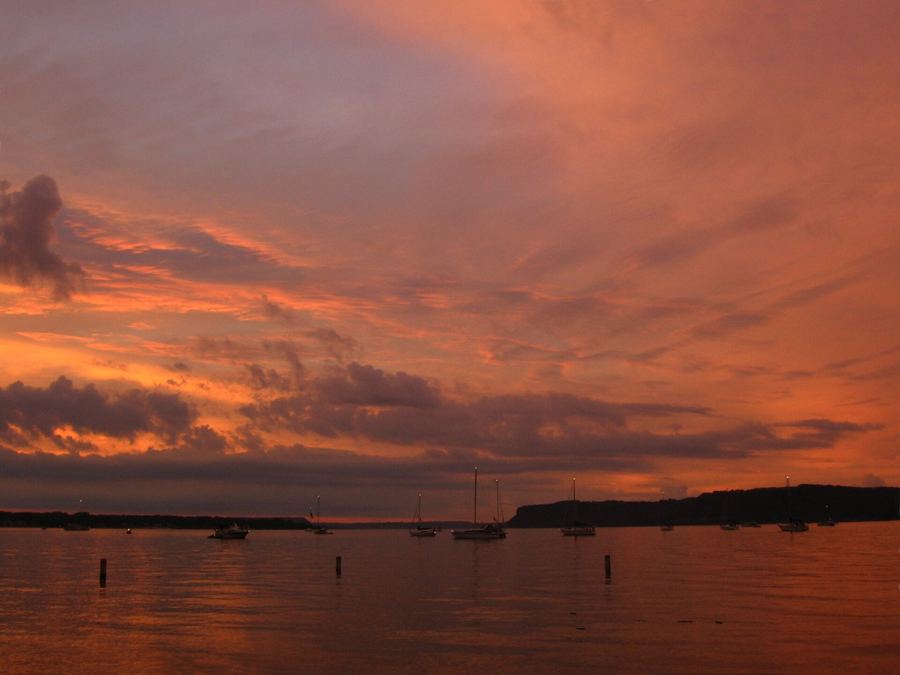
A good orchard day pairs fruit with the river. Start at La Crescent and drive the Apple Blossom Drive along the bluff tops, then cross to La Crosse for the view from Grandad Bluff. Or drive the shores of Lake Pepin on US-61 and Wisconsin Highway 35, stopping at orchards on the ridges above the lake and at the river villages below, and cross at Red Wing or the Wabasha–Nelson bridge.
The apple season lines up with the turning of the bluffs, so a late September or early October trip can catch both. Weekdays are quieter than weekends, mornings are best for picking, and a bag of apples on the back seat is the best way to bring the season home.
Whose pictures these are
- MikeyMooseCC BY-SA 3.0
- Michael BareraCC BY-SA 4.0