- Best months
- Late February into March
- Getting there
- US-61 to Wabasha, Highway 35 to Alma
- Bring
- Binoculars, a thermos, and boots for packed snow
- When
- December, January, February, March
Why the eagles come here
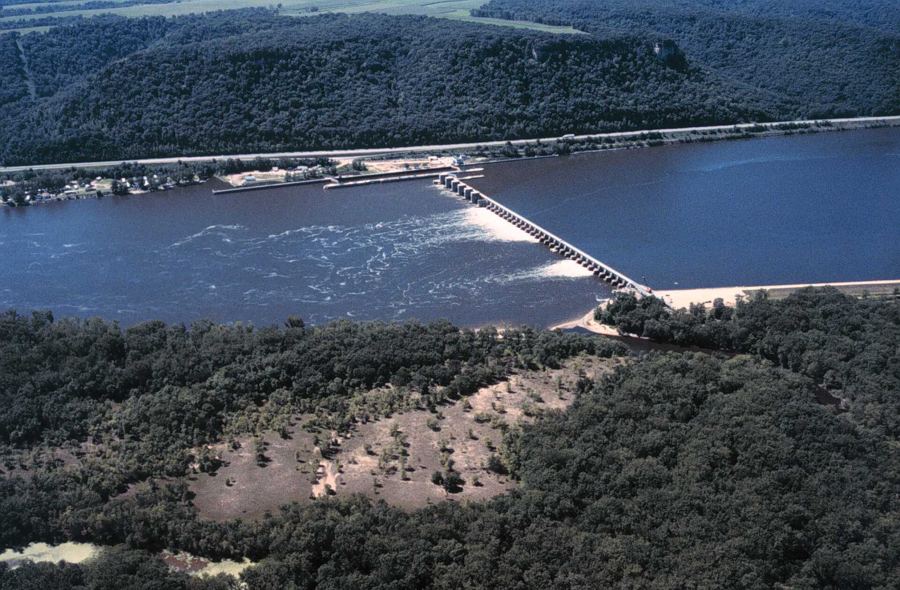
By the middle of winter most of the Mississippi between Red Wing and La Crosse lies under ice and snow. Not all of it, though. Where the current runs fast, the river refuses to close. The longest open reach is at the foot of Lake Pepin, where the wide, slow lake narrows again past Reads Landing and Wabasha and the Chippewa River pours in from the Wisconsin side. Smaller pools of open water steam below each lock and dam, where water churning through the gates keeps ice from forming.
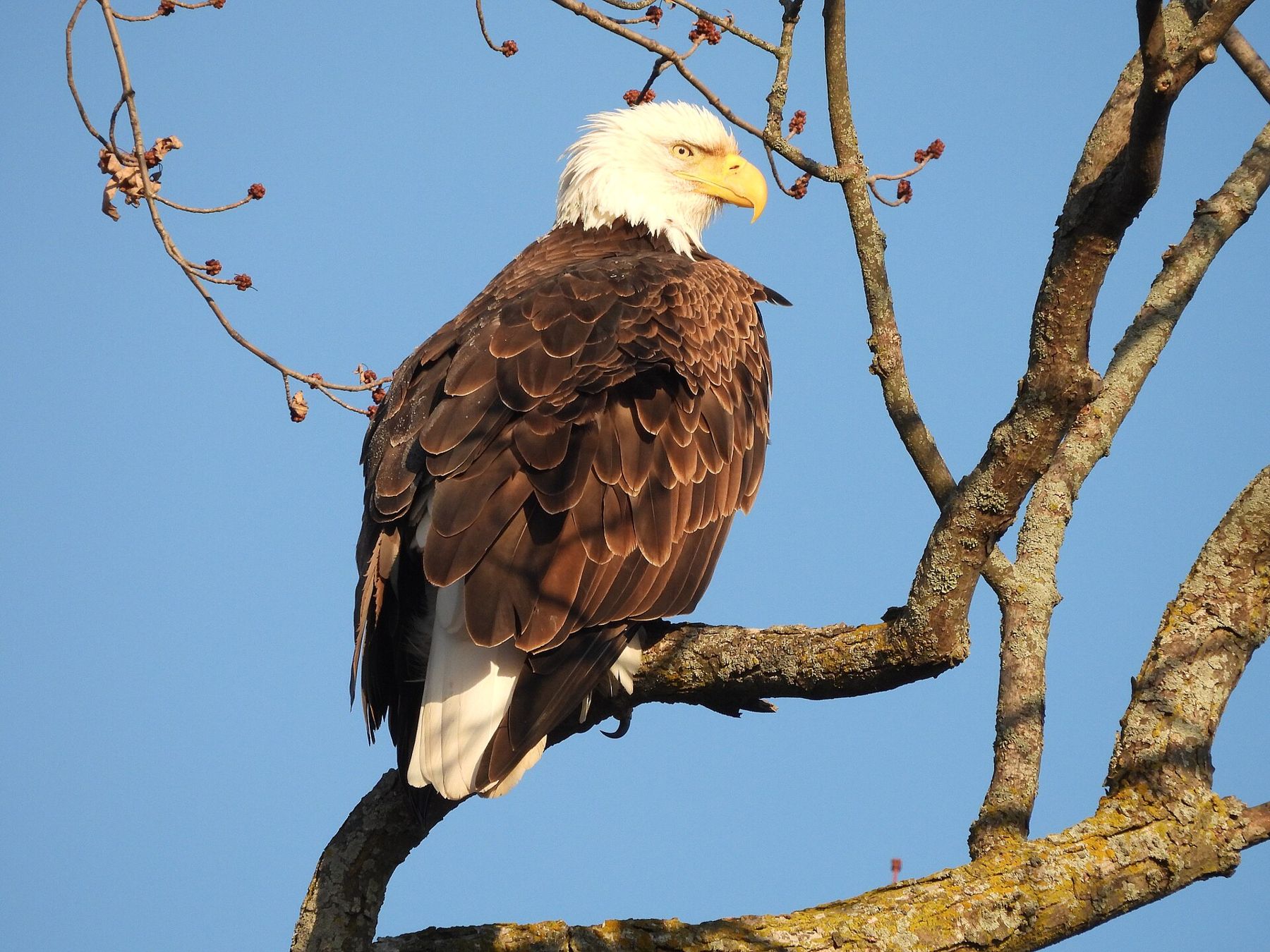
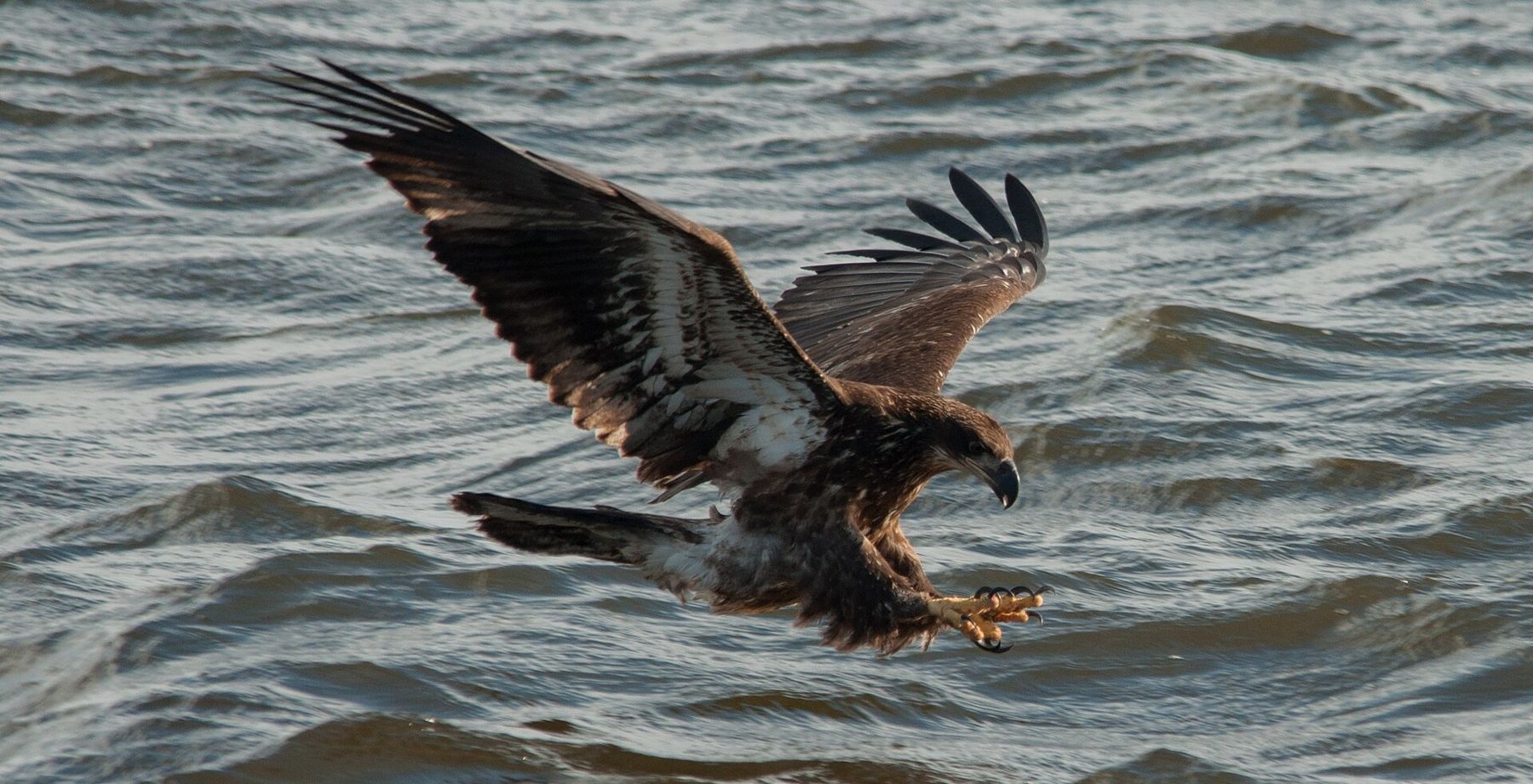
Bald eagles need that open water. Most of them nest on lakes and rivers farther north that freeze solid, so in late autumn and winter they drift south until they find fish they can reach. Shad and other fish that pass through the dams are sometimes stunned or killed in the turbulence, and they float up where an eagle can take them off the surface. A stretch of river with open water, a steady supply of fish and tall trees for perching is about as good as winter gets for an eagle, and this valley has several.
What a winter morning looks like
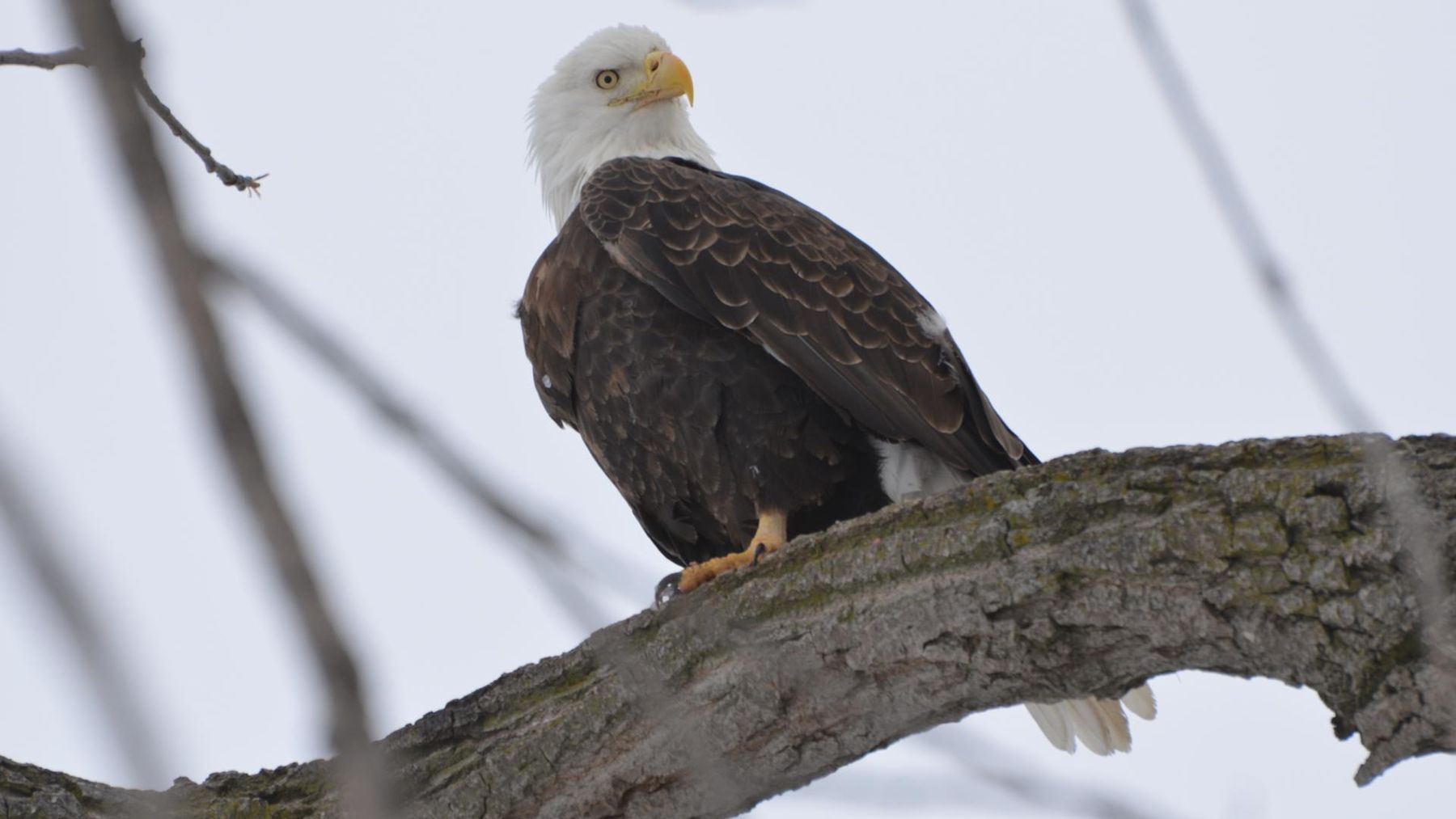
Eagles spend winter nights in sheltered roosts, often in wooded side valleys out of the wind. In the first hours of daylight they come out to the river to feed. That is your best window. On a cold, still morning you may see a dozen birds lined along the edge of the ice, others hunched in the cottonwoods along the shore, and a few working low over the water. By late morning many have eaten and settled into the trees, where they sit for hours to save energy.
Numbers change through the season. Birds trickle in from late November, a steady population holds through the deep cold, and many people find the best counts from late February into March, when eagles moving back north stop to feed on whatever water has opened. A thaw spreads the birds out. A hard freeze pulls them back to the few places that stay open.
Not every eagle has the white head and tail. Young birds are mottled brown and white and take about five years to reach adult colour, so a brown, blotchy bird the size of an eagle usually is one.
Where to watch on each bank
On the Minnesota side, US-61 follows the shore past Reads Landing and into Wabasha, and the open water below Lake Pepin is often in plain sight from the road and from the town's riverfront. Wabasha has built a good part of its winter around the birds, and its eagle centre on the riverfront is a museum with live eagles you can see up close, a good place to start before you go looking for wild ones.
Cross the Wabasha–Nelson bridge and follow Wisconsin Highway 35 south, and you run along the other edge of the same open water. Farther down, Lock and Dam 4 at Alma has a public viewing platform beside the lock, and the open tailwater below the gates is a regular feeding spot. Similar open pools form below the dams farther south, so a slow drive down one bank and back up the other gives you several chances.
 Further along the riverLocks, dams and barges
Scan the far edge of the ice, the tops of shoreline trees and any snag sticking out of the water. Eagles are big, but against dark woods and grey ice they are easy to miss until one moves.
Watching without disturbing
Winter is hard on eagles. Every time a bird is flushed from a perch or chased off a meal it burns energy it may not be able to replace on a short, cold day. Bald eagles are protected by federal law, and that protection covers disturbing them, not only harming them. The practical rules are simple.
- Stay in or beside your car when you can. Birds near roads are used to traffic, and a parked car works as a blind. A person walking toward them does not.
- If an eagle stops feeding, stares at you or shifts on its perch, you are too close. Back away slowly.
- Never walk toward roost trees, and stay clear of wooded roosts at dawn and dusk when birds are arriving or leaving.
- Do not fly drones near eagles, and do not throw food or try to lure them closer.
- Park fully off the road in a pullout or lot. US-61 and Highway 35 carry trucks at highway speed, and a car stopped on the shoulder of a curve is a real hazard.
Good binoculars do more for you than getting closer ever will. A spotting scope on a window mount, or a long camera lens, lets you watch a bird eat without it ever knowing you are there.
Staying warm by the river
The open water that draws the eagles also makes the coldest spots in the valley. Wind runs straight up and down the river, and damp air off the water cuts through clothing that feels fine in town. Dress in layers you can add to, wear a hat that covers your ears, and bring mittens over thin gloves so you can work binoculars or a camera without freezing your fingers. Insulated boots matter, because riverfront parks and pullouts are often packed snow and ice.
Keep off the ice at the edge of open water. Shore ice next to moving current can look solid and be thin from below, and it is no place to stand for a closer look. The birds are perfectly visible from the bank.
Days are short in December and January, and the light goes early behind the Minnesota bluffs. Plan a morning start, carry something hot to drink, and keep your fuel tank well above empty on the quieter stretches of Highway 35.
Making a day of it
A winter eagle day pairs well with the rest of the valley. Frontenac State Park and the overlooks along US-61 give long views over frozen Lake Pepin, and the ice-fishing season brings small villages of shelters onto the lake when conditions allow. Small river towns on both banks keep their cafes open through the cold months, and a mid-morning break to thaw out gives the birds time to settle before an afternoon look.
If you go only once, go on a clear, cold morning after a stretch of hard frost, start early, and drive slowly. The river will show you where the open water is, and the eagles will be close to it.
Whose pictures these are
- U.S. Fish and Wildlife Service - Midwest RegionPublic domain
- SaisivasCC BY-SA 4.0
- Andy Reago & Chrissy McClarrenCC BY 2.0