- Best months
- January and early February
- Getting there
- US-61 to Lake City, Highway 35 to Pepin
- Bring
- Ice picks, a float coat, snowshoes and a thermos
- When
- December, January, February
A lake made by a river
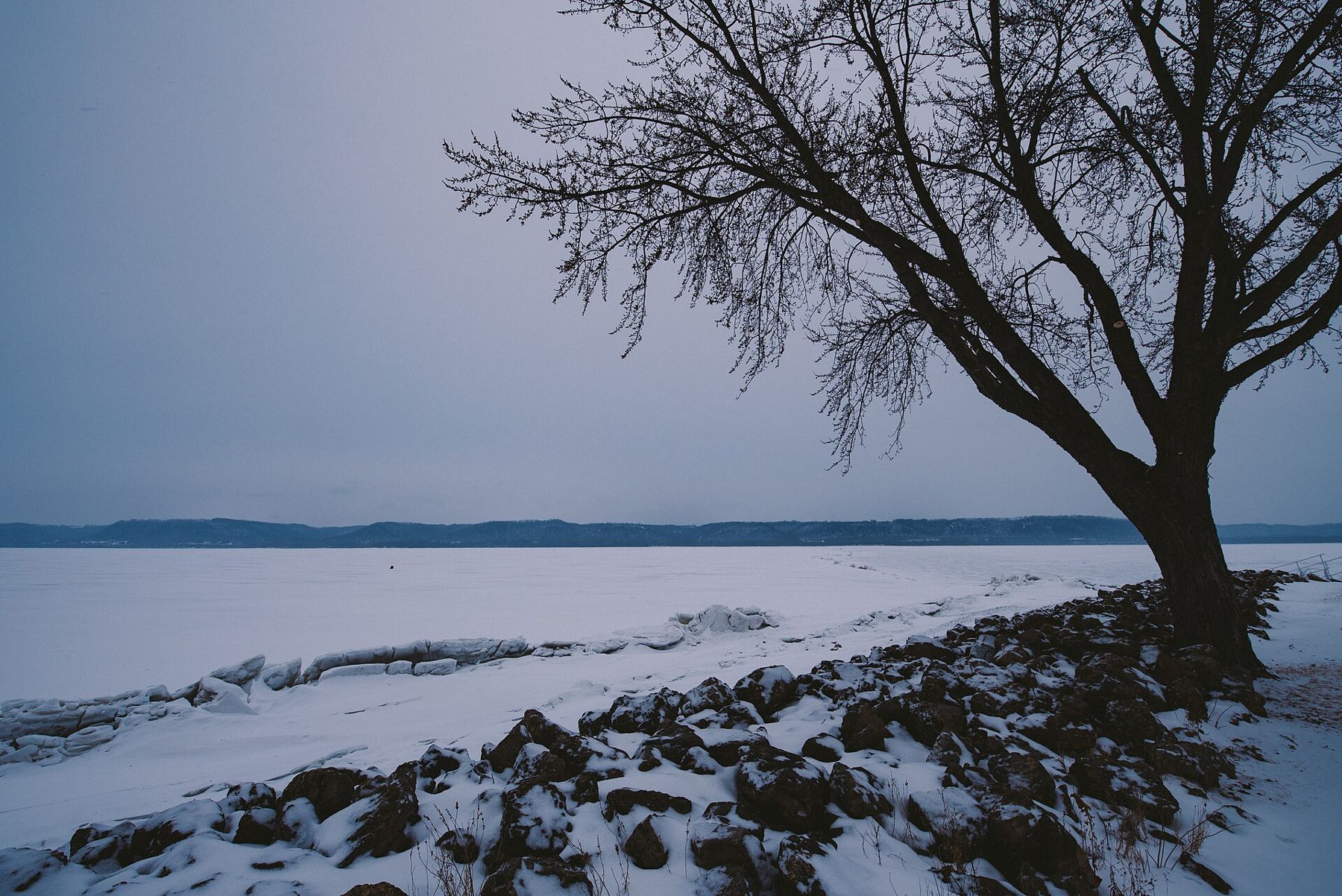
Lake Pepin is not a separate lake beside the Mississippi. It is the Mississippi itself, spread out behind the delta of the Chippewa River, which enters from Wisconsin at the lake's lower end and has piled up enough sand over thousands of years to slow the big river into a lake more than twenty miles long. In summer it is the sailing water of the valley. In a normal winter it freezes over, and the view from the bluffs on either side changes from blue water to a long white plain framed by dark wooded hills.
That origin matters on the ice. Lake Pepin always has a current moving through it, faster in some places than others. The ice that forms over a river behaves differently from the ice on a still lake, and that is the first thing to keep in mind before you step onto it.
Ice fishing from the lake towns
When conditions allow, ice anglers set up off the lake towns on both shores, from Lake City on the Minnesota side to Pepin and the villages on the Wisconsin shore. Some sit on a bucket over a single hole. Others pull portable shelters or set up heated houses for the season. Walleye, sauger, perch and panfish are the usual targets, and the activity tends to cluster in the same bays and off the same points year after year, because locals know where the ice forms early and where it stays thin.
If you want to try it, the simplest approach is to go with someone who fishes the lake every winter, or to ask at a bait shop in town before you go out. They will know how the ice is that week, which access points people are using, and where the current has kept things soft. Both states require a fishing licence, the rules on the Minnesota and Wisconsin halves of the lake differ in places, and limits and seasons change, so check the current regulations for the shore you are fishing from.
Ice safety, told plainly
No ice is ever completely safe, and river ice is less predictable than lake ice. On Lake Pepin, current, springs, inflowing streams and pressure ridges all weaken ice in places that can look exactly like the solid ice around them. The upper end of the lake and the outlet toward Reads Landing and Wabasha carry more current and are often thin or open well into winter. Ice near docks, bridge piers, reeds and shorelines can be poor even in a deep cold spell.
The natural resources departments in Minnesota and Wisconsin both publish ice safety guidance every winter, including minimum thicknesses they consider for walking and for vehicles on new clear ice. Read that guidance before you go, and treat those numbers as a floor rather than a promise. Thickness varies across a single stretch of lake, and white, snowy or slushy ice is weaker than clear ice of the same depth.
- Check conditions locally on the day. Ice that was good last weekend may not be good now.
- Drill or chisel test holes as you go, and turn back if the ice thins or sounds wrong.
- Carry ice picks on a cord around your neck, a throw rope, and wear a float coat or life jacket.
- Do not go out alone, and tell someone on shore where you are going and when you will be back.
- Stay off the ice entirely early and late in the season, after a thaw, and anywhere you see open water, dark patches or cracks with water in them.
If you are not sure, stay on shore. The lake looks just as good from the bluffs.
 Further along the riverEagles on the open water
Snowshoeing the bluffs
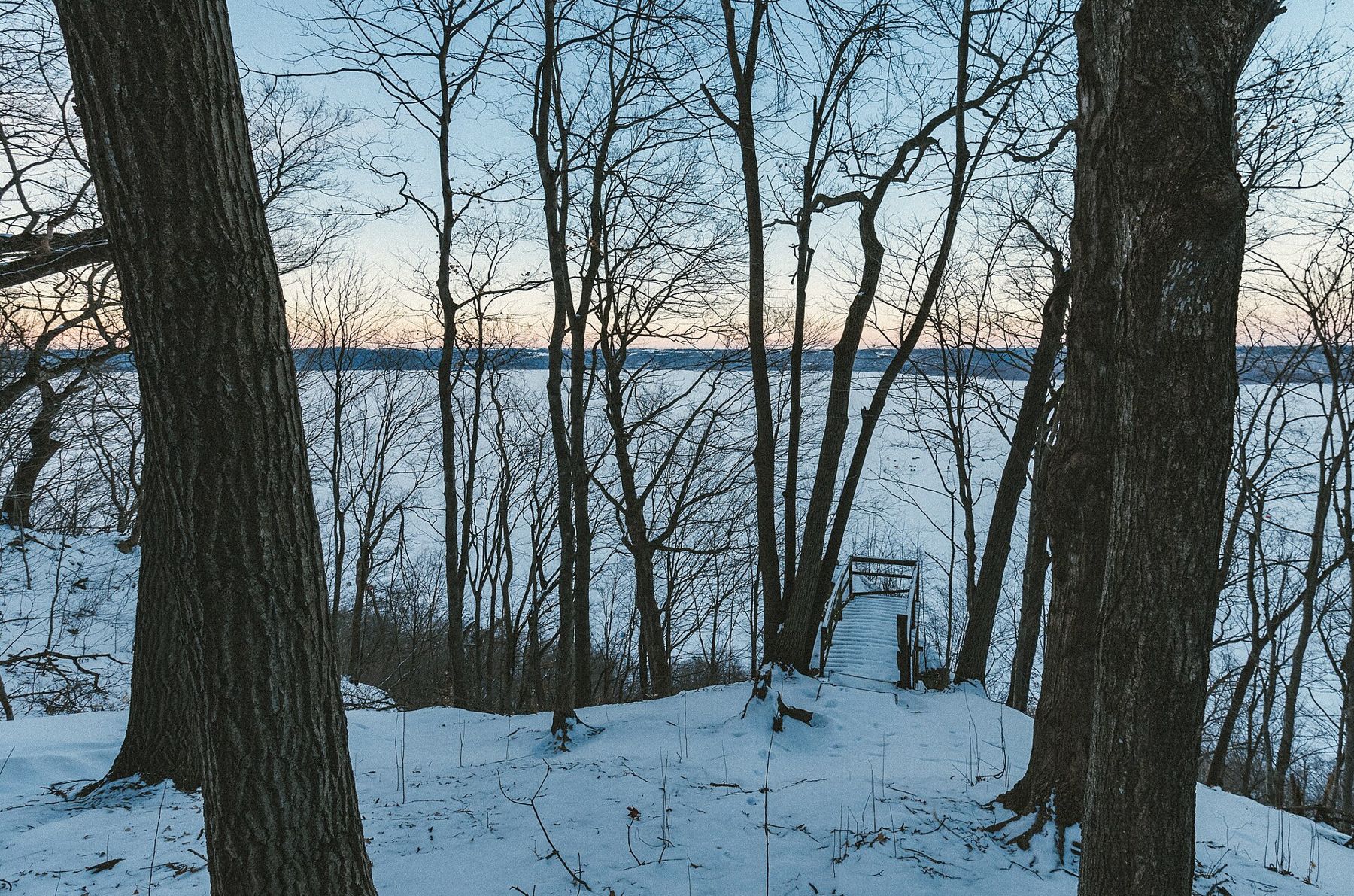
For most visitors the best way to see frozen Lake Pepin is from above. Frontenac State Park, on the Minnesota side between Red Wing and Lake City, has bluff-top trails with viewpoints over the lake, and in winter the bare trees open up views you do not get in summer. Snowshoes help when snow is deep. After a thaw and refreeze, traction devices on your boots are often more useful, because the steeper trail sections turn icy.
Across the lake, the bluffs above the Wisconsin villages offer their own views back toward Minnesota, and the Maiden Rock area has trails worth walking in any season. Wherever you go, keep well back from bluff edges. Snow can hide where solid ground ends, and overhanging drifts break away without warning.
State parks require a vehicle permit or pass, and winter trail grooming and closures vary from year to year. Check with the park before you go.
Short days and long light
In December and January the sun sets in the late afternoon, and in the valley the bluffs bring dusk on even earlier. That leaves a short working day, so start in the morning and plan to be off the trails and the ice well before dark. The upside is the light itself. Low winter sun rakes across the snow on the lake and catches the far bluffs, and on clear mornings frost hangs in the shoreline trees. Overcast days turn everything grey and blue, which has its own quiet appeal.
Cold on the lake is a different cold from cold in town. Wind sweeps the open ice from end to end, and even a light breeze cuts through clothing quickly. Layers, a windproof shell, a hat, mittens and insulated boots are the minimum. A thermos of something hot is not a luxury.
A winter day on both shores
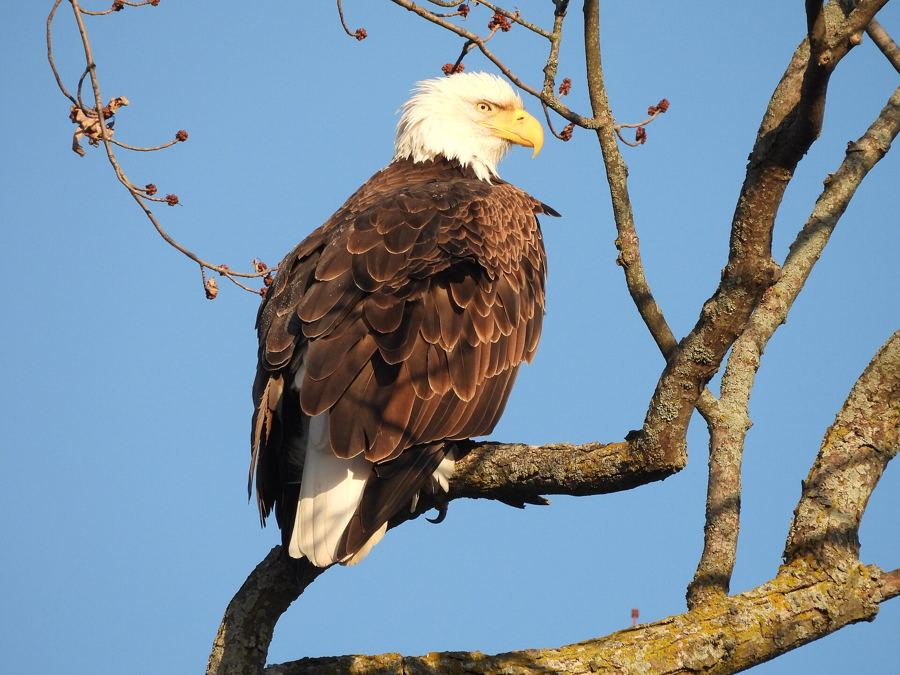
A good winter loop runs down US-61 on the Minnesota side and back up Wisconsin Highway 35 on the other, crossing at the Red Wing and Wabasha–Nelson bridges. Stop at the overlooks, walk a short trail at Frontenac, and watch the ice-fishing villages from the shore at Lake City or Pepin. Below the lake, where the current keeps the river open, eagles gather through the cold months, and they are one more reason to drive slowly and look out at the water.
Whose pictures these are
- Tony Webster from Minneapolis, Minnesota, United StatesCC BY 2.0
- Tony Webster from Minneapolis, Minnesota, United StatesCC BY-SA 2.0