- Best months
- May, September, and October
- Getting there
- US-61 between Red Wing and Wabasha
- Bring
- Binoculars, a light jacket, and a picnic
South of Red Wing the Mississippi stops behaving like a river. The bluffs step back, the channel spreads out, and for the next long stretch the water lies wide and open between two walls of wooded hills. This is Lake Pepin, the widest natural part of the upper Mississippi, and the Minnesota shore has two good places to meet it: Frontenac, with its state park and old village, and Lake City, the biggest town on the lake.
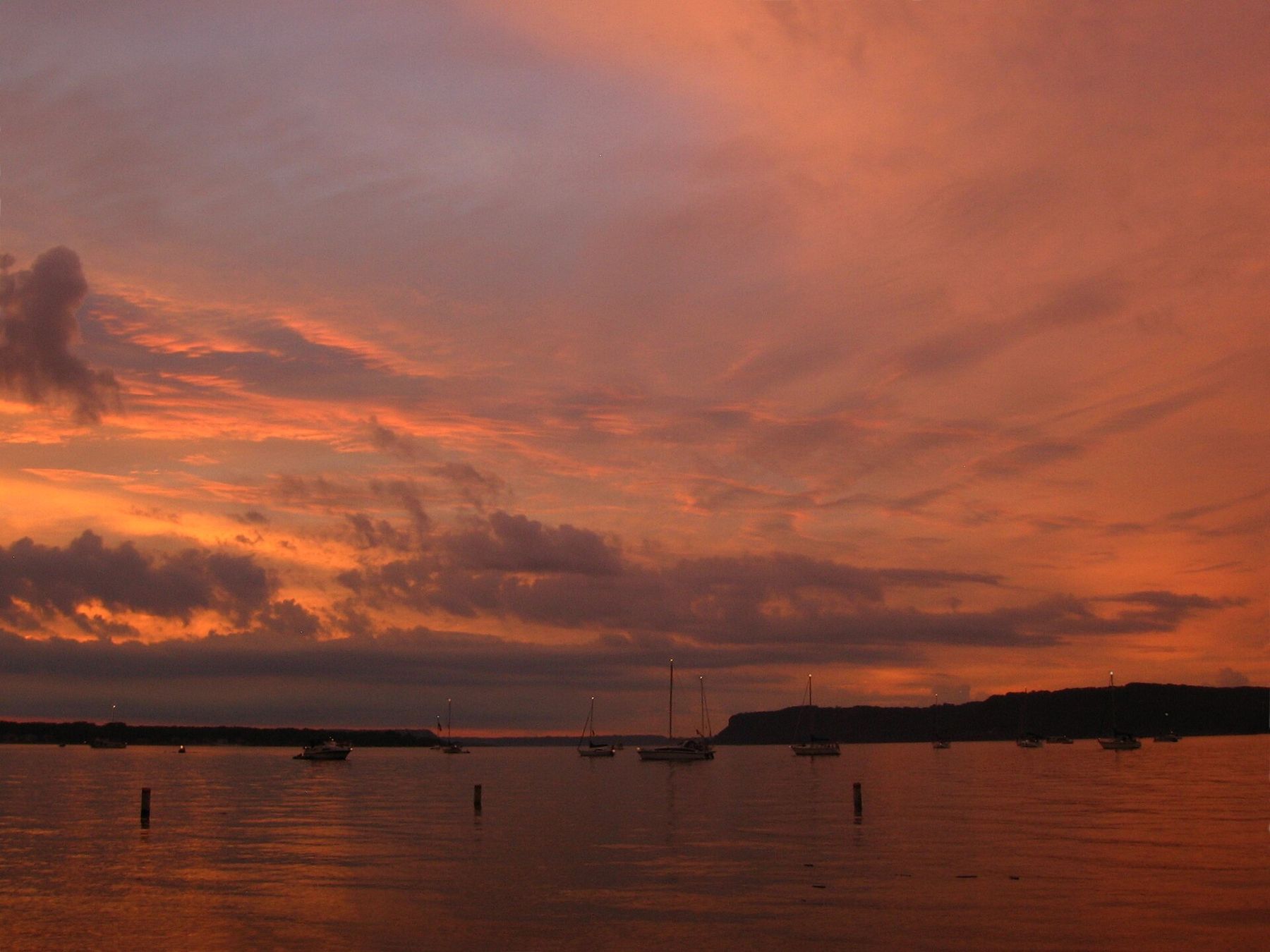
The lake exists because of a river coming in from Wisconsin. The Chippewa River, joining the Mississippi near the lake's lower end, carries so much sand that its delta has partly dammed the bigger river, and the water backs up behind it. The result is a lake with real waves, steady winds and a long view in both directions, unlike anything else on this stretch of the Mississippi.
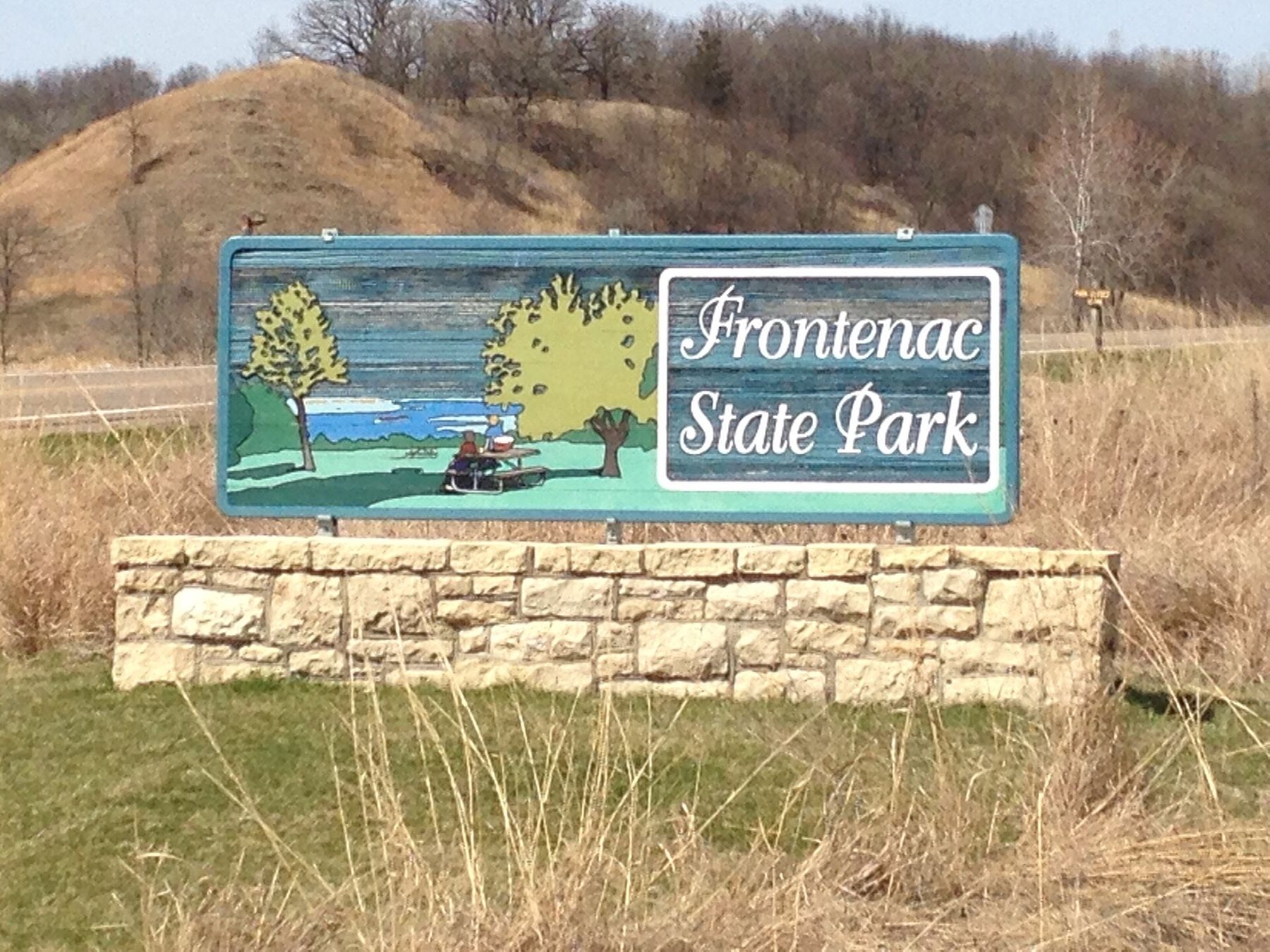
Frontenac State Park
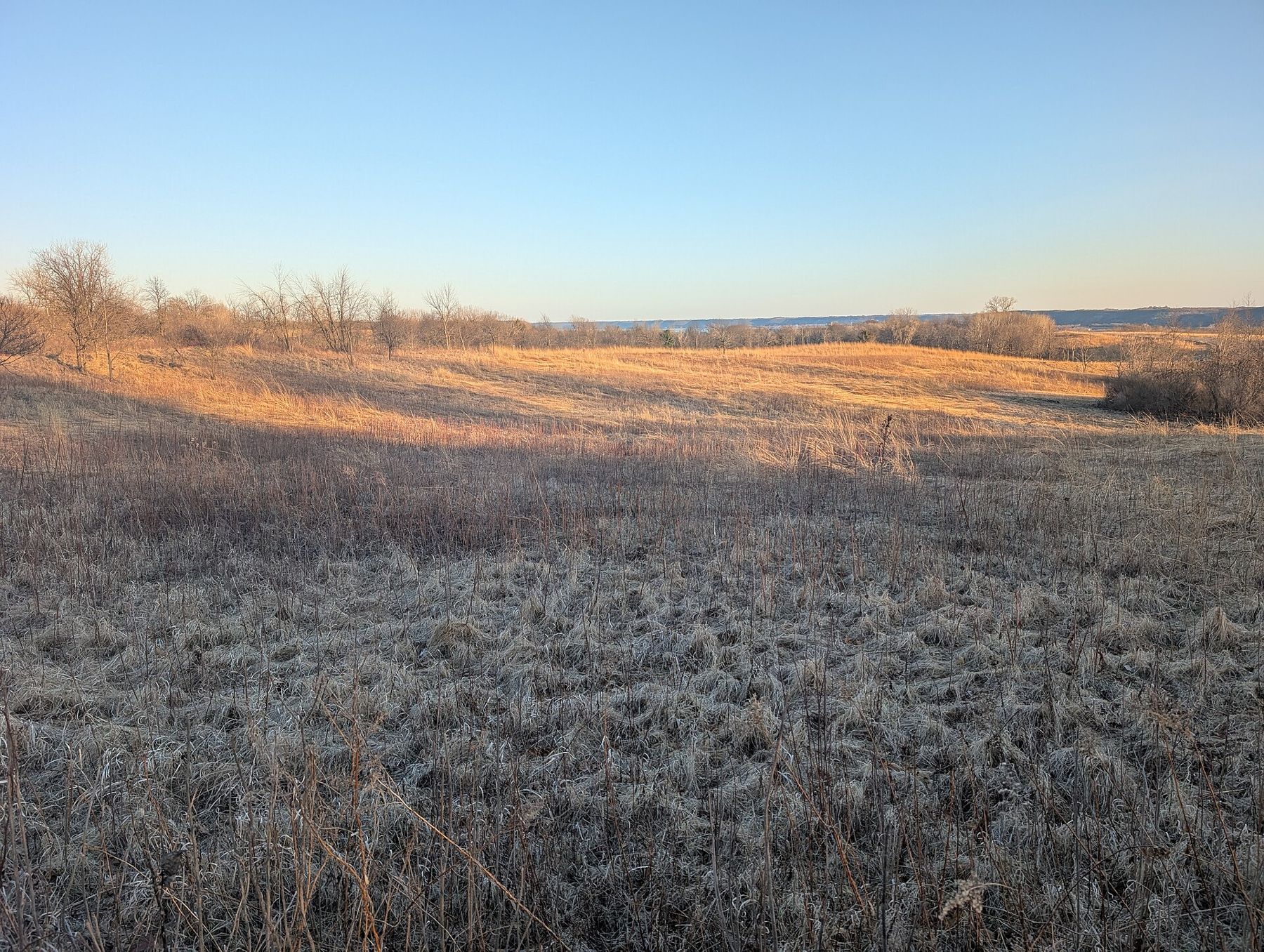
Frontenac State Park spreads across a high bluff above the lake, with a lower area of floodplain forest and shoreline beneath. A road climbs to the top, where a picnic ground and overlooks look straight down the lake toward Wisconsin. A trail runs along the bluff edge through oak woods, with openings where the whole of Lake Pepin lies under you, sails moving slowly across it and the far shore blue with distance.
Along that trail is In-Yan-Teopa, a large rock with an opening worn through it, a sacred site to the Native peoples of this valley. Treat it as such: look, but do not climb on it. Other trails drop down the bluff to the shore and wind through prairie remnants and woods, and the park has a campground, open in season.
Frontenac is best known among birders. In May the bluff sits on a main line of the Mississippi flyway, and waves of warblers and other songbirds pour through the oaks on their way north. On a good morning the treetops seem alive with movement and song. Bring binoculars, go early, and be patient. Our story on warblers on the bluffs explains what to look for and when.
Old Frontenac
Below the park, on a quiet road off US-61, lies Old Frontenac, a small village of nineteenth-century houses under tall trees by the water. It was laid out by the Garrard brothers in the 1850s and became a summer retreat for well-off visitors who arrived by steamboat. When the railroad was built along the shore, the line went inland of the village, and Frontenac Station grew up beside the tracks on the highway, leaving the old village to itself.
That is why it looks the way it does. The village is a historic district, and the houses are private homes, so walk or drive through slowly and respect the residents. It takes ten minutes to see, but it is one of the most complete small pieces of the steamboat era left on this river.
Look for the small Episcopal church and the big frame houses with deep porches facing the lake. In the steamboat years, visitors came up from the cities and further south to escape the summer heat, and Frontenac was a fashionable stop. When the boats stopped calling and the railroad passed it by, the village simply stayed as it was. Its quiet is the point: there is no main street of shops, just the houses, the trees and the lake through the gaps between them.
The lake exists because of a river coming in from Wisconsin.
Lake City
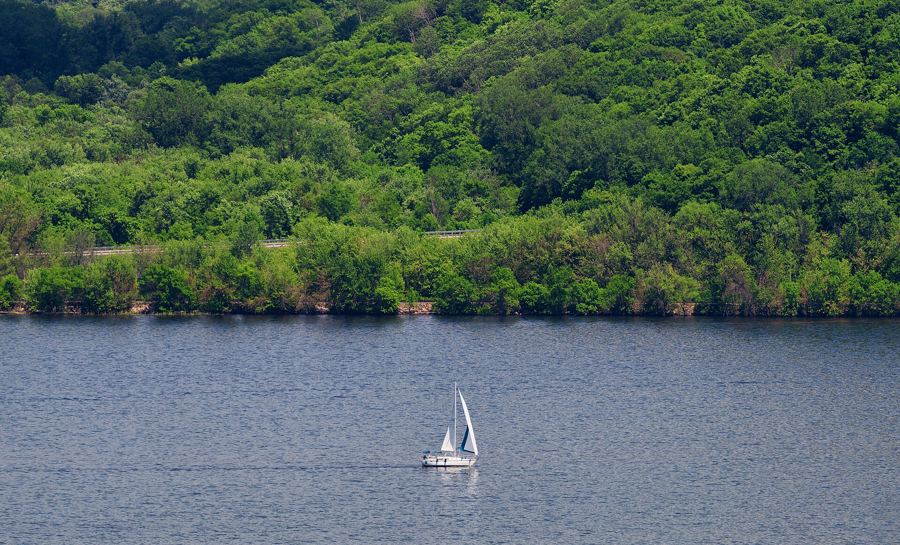
Lake City sits on the lake a little further south, a bigger and busier place with a long waterfront. Its marina is one of the largest on the upper Mississippi, and on a summer weekend it is full of sailboats and cruisers. A paved riverwalk runs along the shore past the marina and the city parks, with benches facing the water and a long pier where people fish and watch the sunset.
 Further along the riverSailing Lake Pepin
The town's claim to fame is water skiing. In 1922 an eighteen-year-old Lake City man, Ralph Samuelson, strapped a pair of boards to his feet and was towed across Lake Pepin behind a boat. It took him days of trying, and he went on to perform for crowds on the lake. Lake City celebrates him as the inventor of the sport, and you will find his story told along the waterfront.
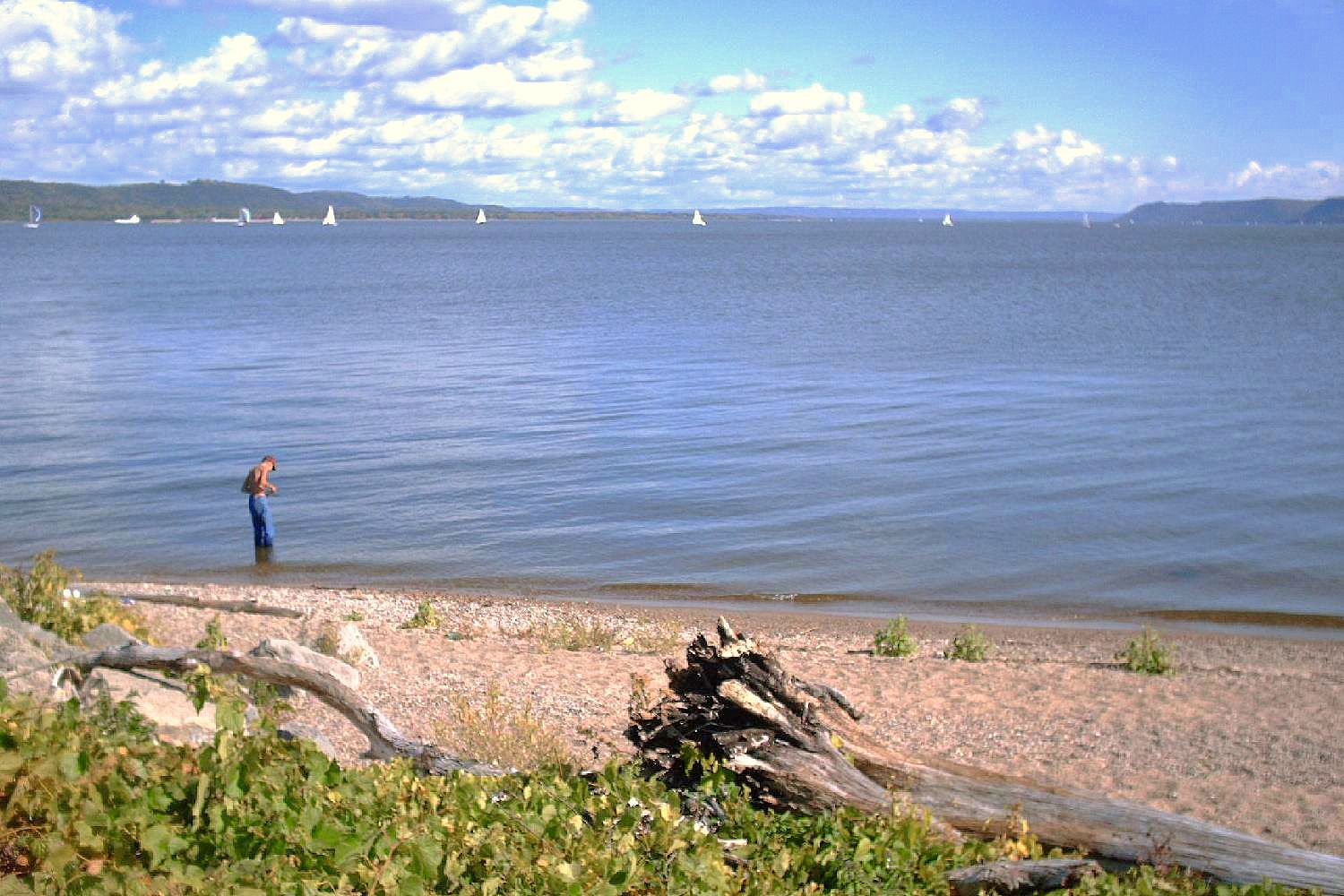
The downtown has brick blocks from the steamboat and wheat years, and the side streets climb toward the bluffs with big old houses. North of town, Hok-Si-La Park has woods, a beach and a campground on the lake. In autumn the orchards around Lake City are busy, and roadside stands sell apples into October; our piece on orchards and cider covers the wider apple country.
On the water, and its weather
Lake Pepin is a real lake, and it can turn rough quickly. Its length lines up with the prevailing winds, and on a gusty afternoon waves build that can swamp a small boat. Storms come in fast over the bluffs in summer, often with little warning from the hidden western sky. If you are paddling or boating, check the forecast, keep close to shore, wear a life jacket and get off the water when the wind picks up or thunder starts.
In winter the lake freezes, and ice fishing shacks appear off Lake City. The ice on Lake Pepin is not uniform: currents keep some areas thin, especially near the inlet and outlet. Follow official ice advice, ask locally, and never assume ice is safe because someone else is out on it.
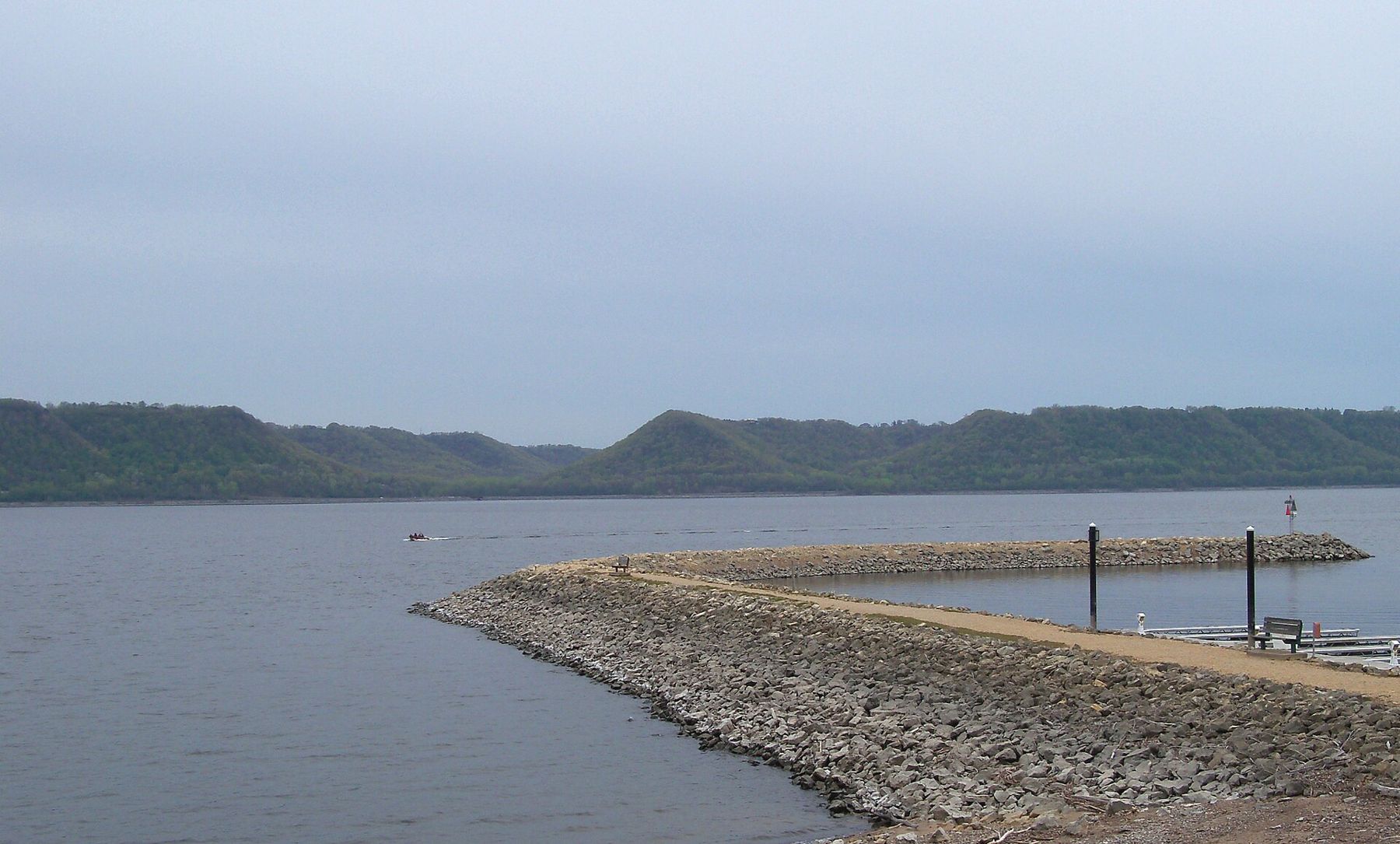
Looking across to Wisconsin
From the Frontenac bluff or the Lake City pier, the hills you see across the water are Wisconsin. Stockholm, a tiny village founded by Swedish settlers, and Pepin, with its harbor and its link to Laura Ingalls Wilder, sit on that shore under the bluffs on Highway 35. There is no bridge on Lake Pepin, so to get there you cross at Red Wing to the north or at Wabasha and Nelson to the south, then follow 35 along the lake.
A full loop of the lake makes a fine day: down US-61 through Frontenac and Lake City, across at Wabasha, back up Highway 35 through Pepin and Stockholm, and over at Red Wing. Our guide to Stockholm and Pepin covers the Wisconsin side. Park hours, campground seasons and the vehicle permit for state parks all change, so check them before you go.
Between the two towns, US-61 runs close to the shore for long stretches, with pull-offs where you can stop and look out over the lake. Freight trains rumble along the tracks between the road and the water, and in spring and autumn long skeins of geese and ducks cross the lake at dusk. It is worth driving slowly and stopping often rather than hurrying from one town to the next.
The best time to come is when the lake is at its most alive: May for the warblers, a clear September week for sailing weather, and October for the colour on both shores. On a still evening at Lake City, with the water flat and the far bluffs turning pink, it is easy to forget you are on a river at all.
Whose pictures these are
- Jsaz974CC BY 3.0
- MolandfreakCC BY-SA 3.0
- MarkTraceurCC BY-SA 4.0
- JonathunderCC BY-SA 3.0
- AlexiusHoratiusCC BY-SA 3.0