- Best months
- June to September
- Getting there
- US-61 to Lake City, Highway 35 to Pepin
- Bring
- Life jackets, a weather radio, sunscreen and layers
- When
- June, July, August, September
A sailing lake on a working river
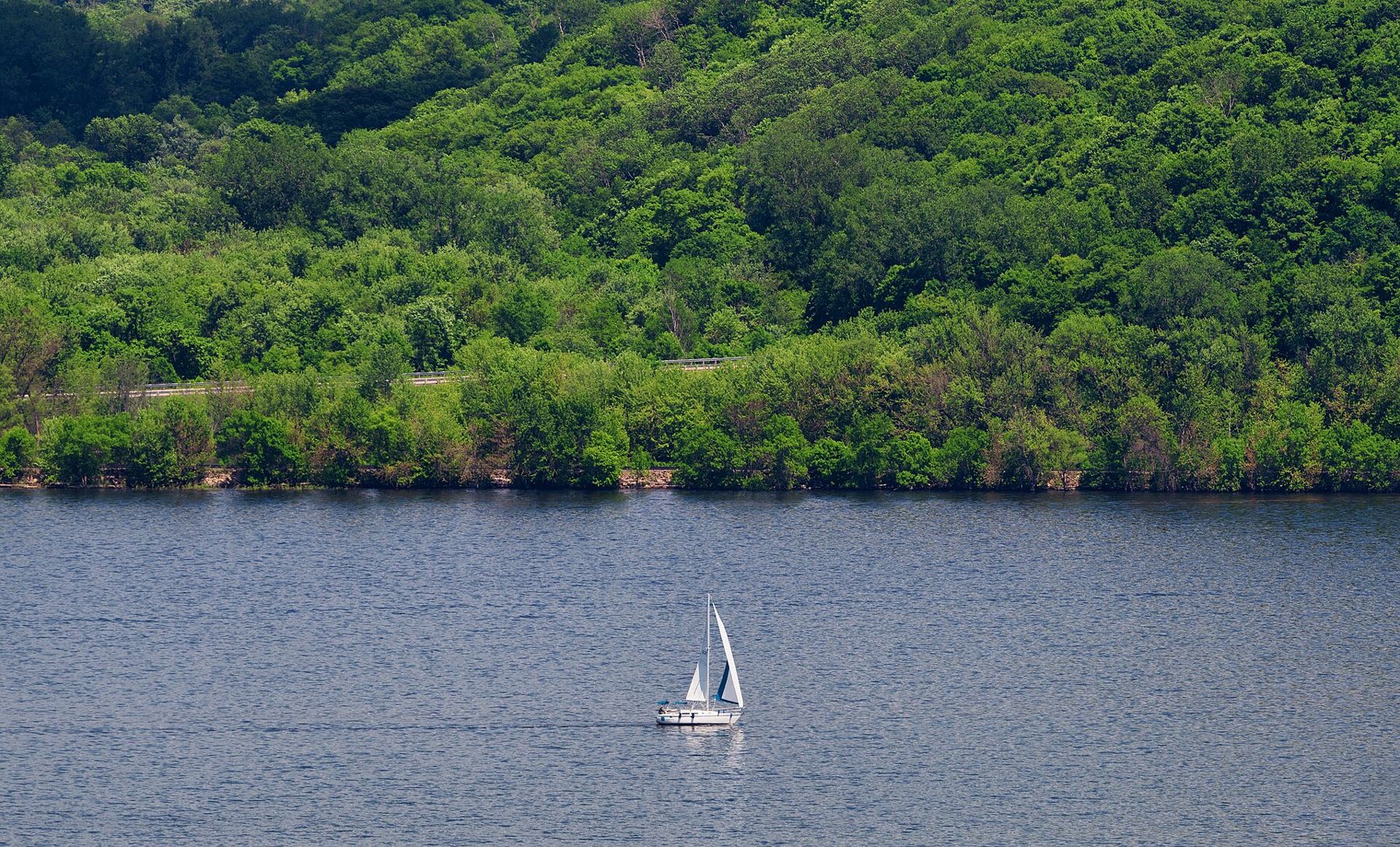
For most of its length between Red Wing and La Crosse the Mississippi is a river of channels, islands and backwaters, no place to tack back and forth under sail. Lake Pepin is different. Here the Chippewa River, coming in from the Wisconsin side, has built a delta that slows the Mississippi into a lake more than twenty miles long and in places more than two miles wide. That gives sailors something rare on a river: open water, room to manoeuvre and a long reach of wind.
On a summer weekend you may see dozens of sails between the bluffs. Lake City, on the Minnesota shore, has a large public marina and a long sailing tradition. The lake also has a place in boating history: in 1922 a young man named Ralph Samuelson strapped boards to his feet behind a boat at Lake City and became the first person known to water ski. A century later the lake is still busy with boats of every kind.
Why the wind works here
The bluffs on both sides of the lake shape the wind. Breezes tend to run along the length of the valley, up or down the lake, and the long open stretch lets them build. On a good day that means steady sailing on long reaches. On a bad day it means steep, short waves that rise faster than many newcomers expect, especially when the wind blows against the river's current.
The wind is not always simple. Near the bluffs it can swirl and gust as it spills over the ridges and down the side valleys, and the far shore can have different conditions from the one you left. Experienced sailors on the lake learn to watch the water upwind for darker patches that show stronger gusts, and to expect shifts near the shore.
Early and late in the season the water is cold even when the air is pleasant. In May and again in late September a capsize can quickly become dangerous, so dress for the water temperature, not the air, and keep a dry layer aboard. Midsummer brings warmer water, lighter mornings and a breeze that often fills in by early afternoon.
Storms that come over the bluffs
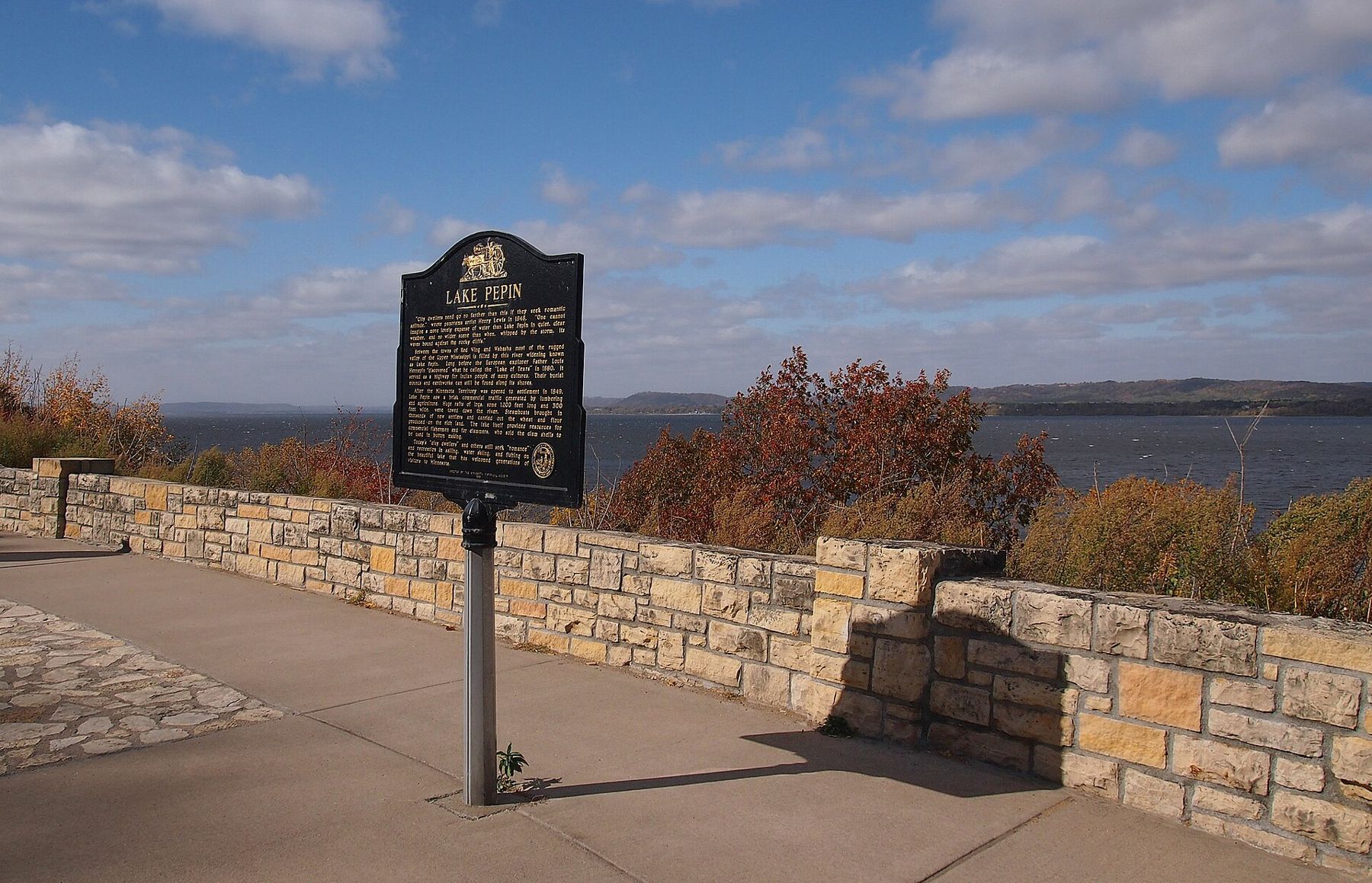
The biggest risk on Lake Pepin is weather that arrives faster than you can see it coming. Summer storms usually move from the west, and the Minnesota bluffs hide the sky behind them. A line of storms can be on top of the lake within minutes of the first dark cloud showing over the ridge, with wind shifts, gusts strong enough to knock a boat flat, lightning and a sharp, steep chop.
- Check the forecast before you leave the dock, and carry a marine radio or a phone with weather alerts.
- Watch the western sky and listen for thunder. If storms are possible, stay close to harbour or do not go out.
- Reef early. Reducing sail before a squall is far easier than during one.
- Everyone on board should wear a life jacket, not just have one stowed. Cold water and sudden capsizes are the hazards that catch people out.
The lake also carries commercial traffic. Towboats pushing barges move up and down the channel through the lake, and they cannot stop or turn quickly. Keep clear of them and of their wakes.
 Further along the riverSandbars and river beaches
Getting on the water
Several lake towns have marinas, public launch ramps and harbours, on both the Minnesota and Wisconsin shores. Lake City has the largest marina on the lake, and Pepin has a small harbour on the Wisconsin side. Seasonal slips, transient docking, launch fees and boat rentals vary from year to year, so contact the marina or town directly before you plan a trip around them.
If you do not have your own boat, look for sailing lessons and charters offered on the lake in summer, and ask about the boat, the skipper's experience and what happens if the weather turns. Both states have boating rules and registration requirements, and they apply on their own halves of the lake. Learn the ones that apply to you.
Beaches and the shoreline
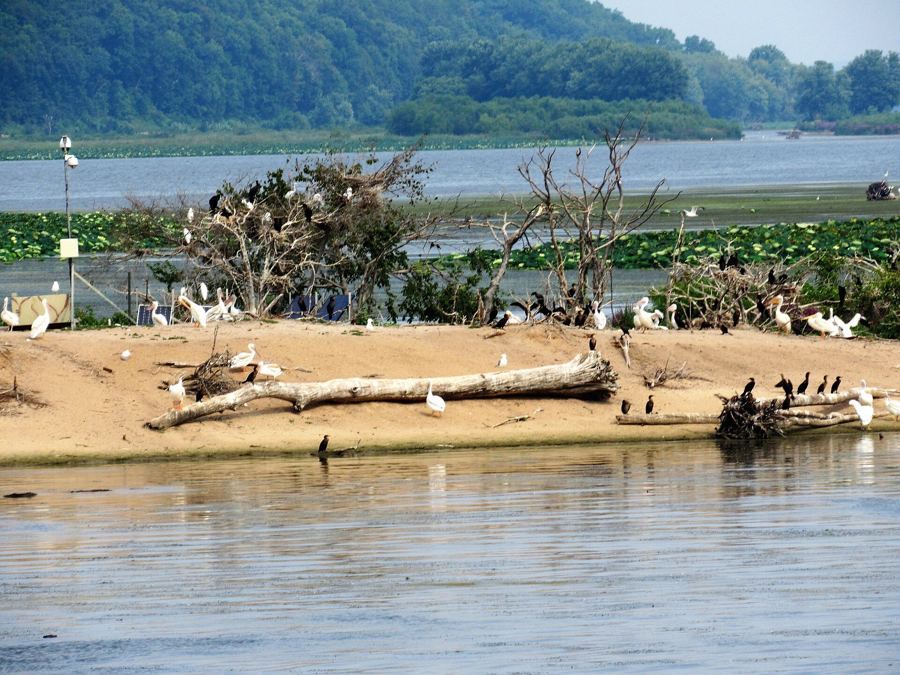
Lake Pepin is not a lake of long sandy beaches, but its shore has public parks, a few swimming spots and plenty of places to sit and watch the boats. Lake City's lakefront and the villages along Wisconsin Highway 35 all give you easy access to the water's edge. Wading and swimming are best in calm water close to shore. The lake has current running through it and drop-offs where the bottom falls away quickly, so keep children close and use a life jacket for anyone who is not a strong swimmer.
Water quality changes through the summer, especially after heavy rain upstream. Check posted advisories before you swim.
Watching from the bluffs
Some of the best views of sailing on Lake Pepin are from land. Frontenac State Park looks down the lake from the Minnesota side, and on a breezy afternoon you can follow a dozen sails as they cross and recross below you. The Reads Landing Overlook on US-61 above the lake's lower end is a quick stop with a wide view. From the Wisconsin side, the bluffs above Maiden Rock look back across the water toward Minnesota.
A summer afternoon of lake watching is best with a drive down one shore and back up the other, crossing at Red Wing and at the Wabasha–Nelson bridge. Stop for a swim, eat on the lakefront, then catch the evening light from an overlook as the last boats head home and the bluffs go gold above the water.
Whose pictures these are
- Tony WebsterCC BY 2.0
- McGhieverCC BY-SA 4.0