- Best months
- Early to late May
- Getting there
- US-61 to Frontenac, Highway 35 to Perrot
- Bring
- Binoculars, a field guide, insect repellent, rain shell
- When
- April, May
A river that birds follow
The Mississippi is one of the great migration routes of North America. Birds that winter around the Gulf of Mexico and farther south follow the river valley north each spring, and the Upper Mississippi between Red Wing and La Crosse sits squarely on that route. The valley gives them water, food and cover in a long, continuous line, with wooded bluffs on one side, floodplain forest and backwaters on the other, and the river's islands and marshes between.
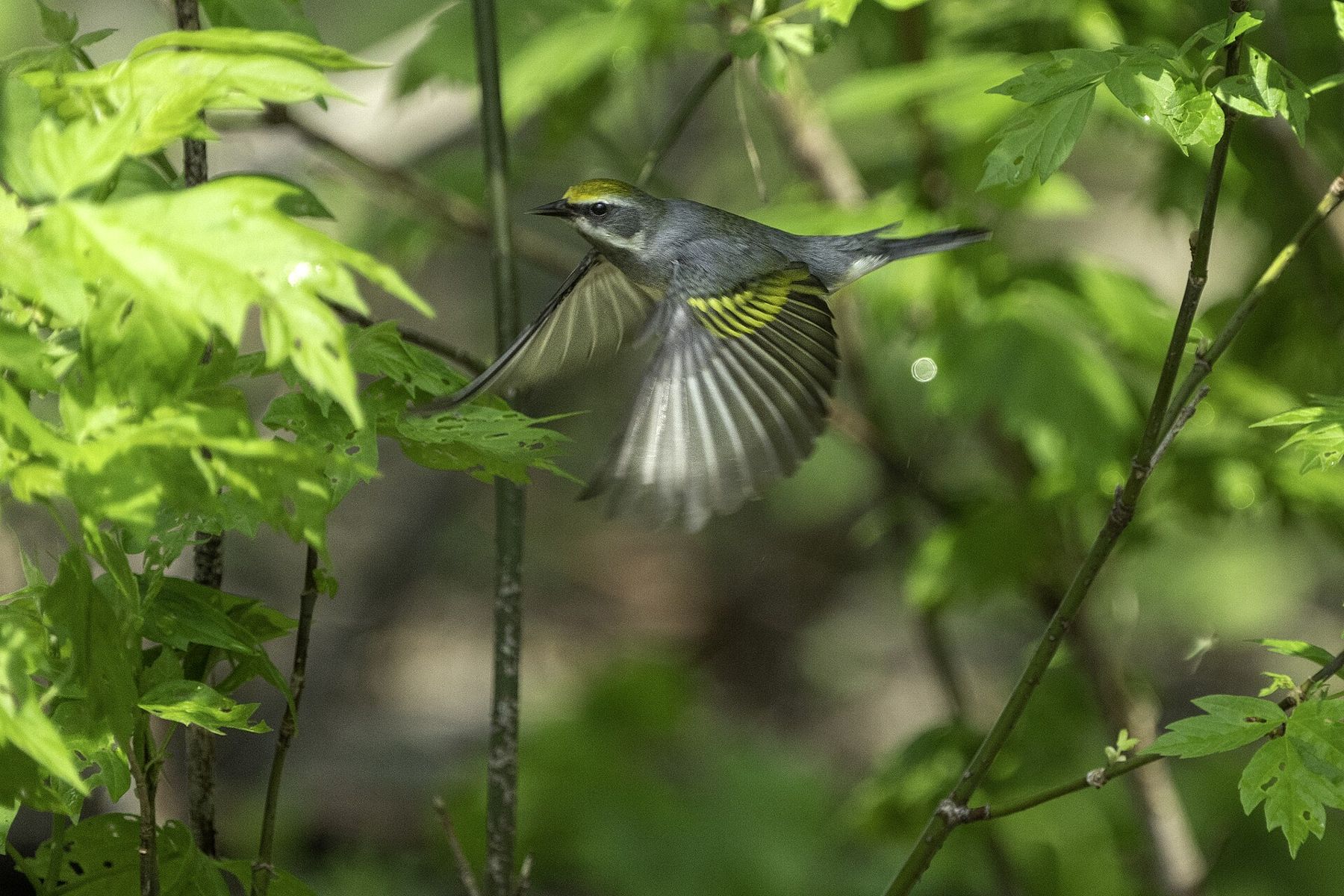
The movement starts with waterfowl as the ice goes out in March, builds through April with early songbirds, and peaks in May, when small, bright warblers pour through the bluff woods on their way to forests in the north. For a few weeks the trees can be full of birds you will not see for the rest of the year.
The warbler weeks
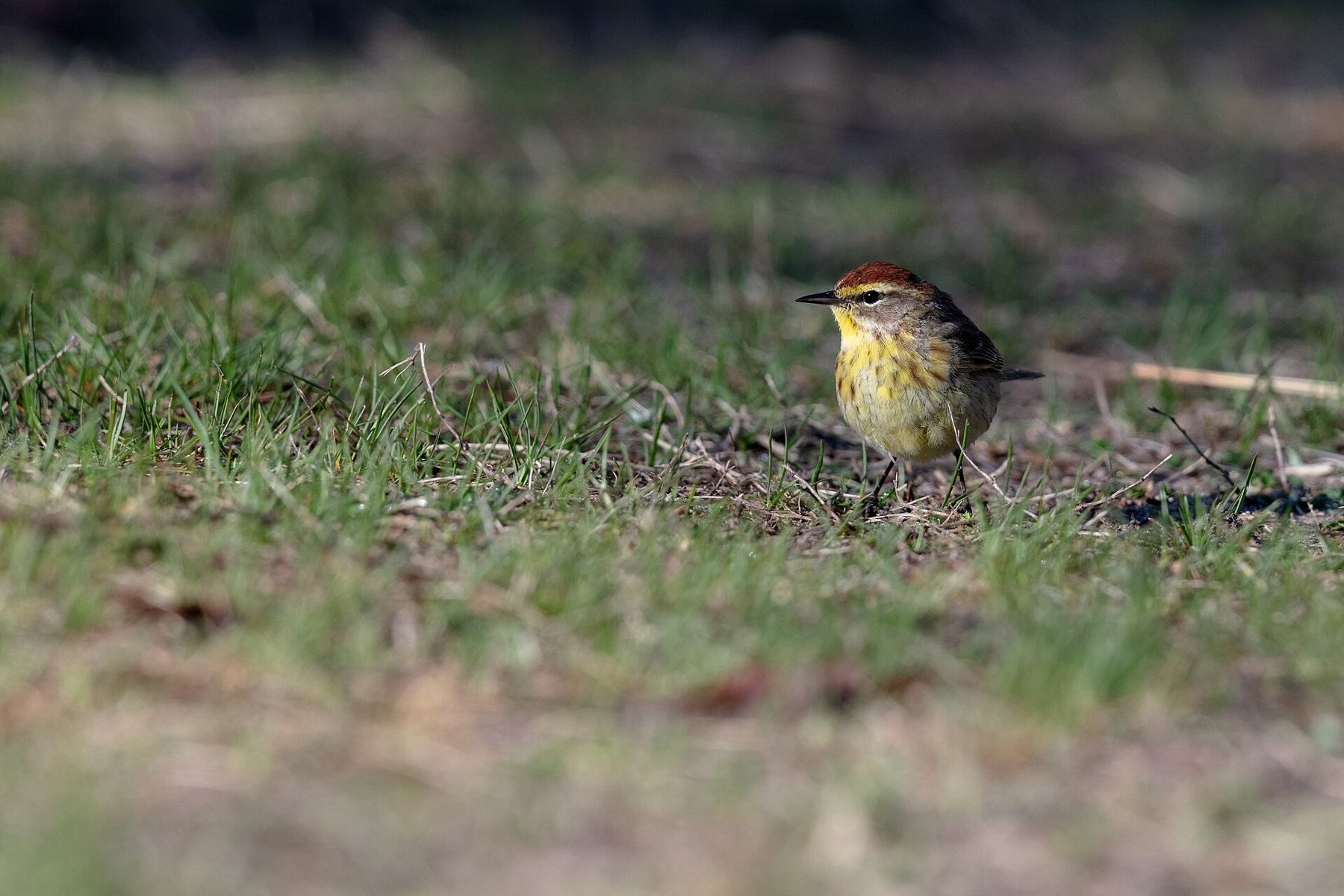
Warblers are small, quick and colourful, and spring is when they are easiest to tell apart, in fresh breeding plumage and often singing. A few early species, such as the palm warbler, which often feeds on the ground and bobs its tail, arrive in late April. The main wave usually comes in May, with the busiest days often around the middle of the month, though the timing shifts with the weather each year.
The best days tend to follow a night of warm south winds, when birds have moved overnight and dropped into the first good woods they find at dawn. A cold front or rain can hold them in the valley for a day or two. Early morning is the time to be out. Birds feed actively in the first hours after sunrise, often in the sunlit upper branches on the edge of a clearing or along a trail.
Frontenac and Perrot
On the Minnesota side, Frontenac State Park, between Red Wing and Lake City, has long been one of the best-known spring birding spots in the region. Its trails run along the top of the bluff and down through the woods toward Lake Pepin, so you can work through different kinds of habitat in a single morning. The bluff-edge woods catch birds moving along the valley, and the lower trails near the water add a different mix. Frontenac and Lake City make an easy base for a few days of early starts.
On the Wisconsin side, Perrot State Park at Trempealeau sits where the Trempealeau River meets the Mississippi, with bluff trails above floodplain forest and backwater. Brady's Bluff has a view over the river that is worth the climb on its own, and the woods along the base of the bluffs can be busy with migrants. Next door, the Trempealeau National Wildlife Refuge has a drive and short trails through marsh, prairie and woods. Together they make a strong morning on the Trempealeau side of the river.
State parks require a vehicle permit or pass, and trail conditions change after heavy spring rain. Check with the park before you go.
 Further along the riverBluff colour, week by week
Pelicans and swans on the backwaters
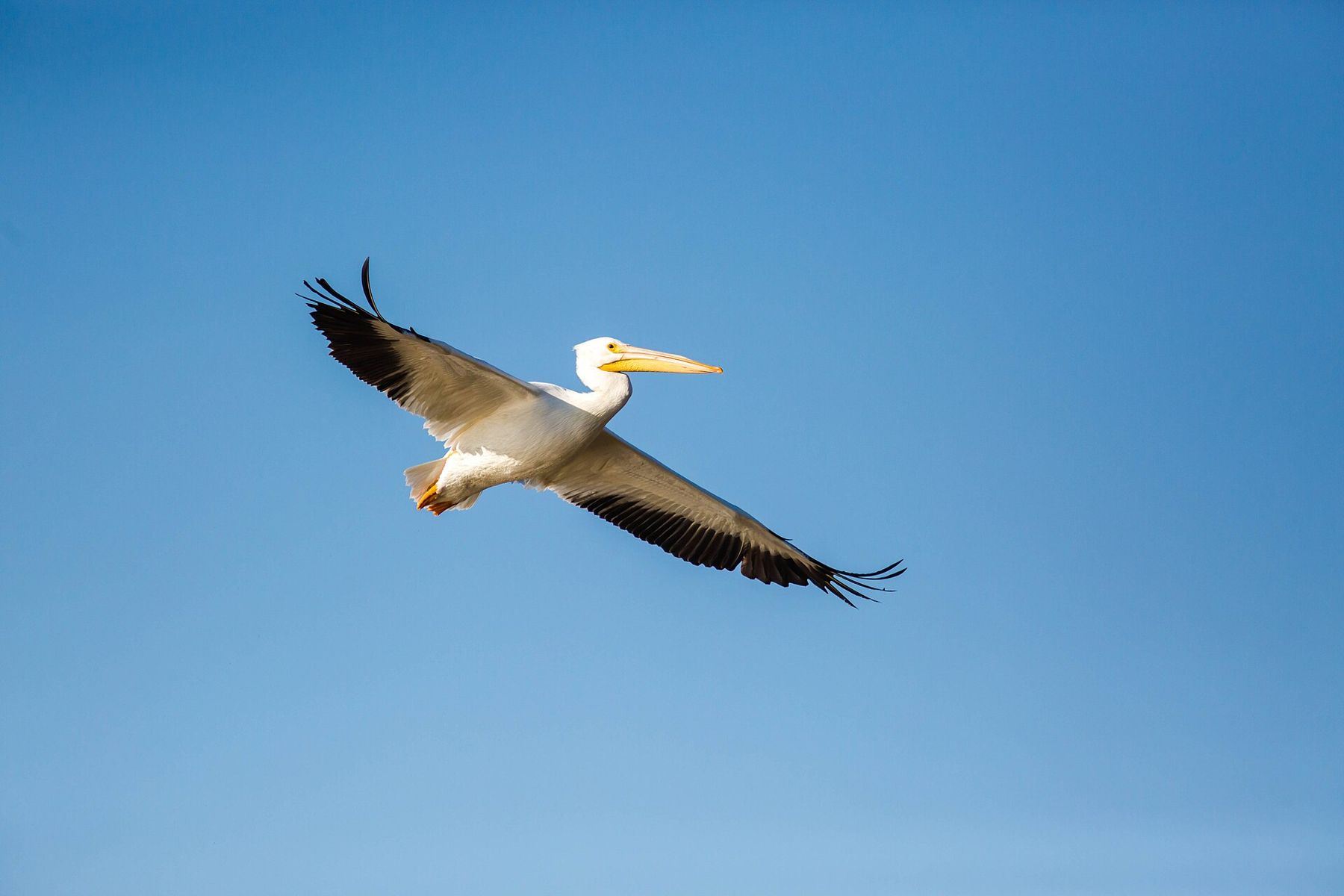
Not everything on the move is small. American white pelicans, with wingspans close to nine feet, travel the river in spring and are now a familiar sight on the backwaters and sandbars of the Upper Mississippi. They often fly in long lines or circle high on rising air, white bodies flashing and black wingtips showing, and on the water they sometimes fish together, herding small fish into the shallows.
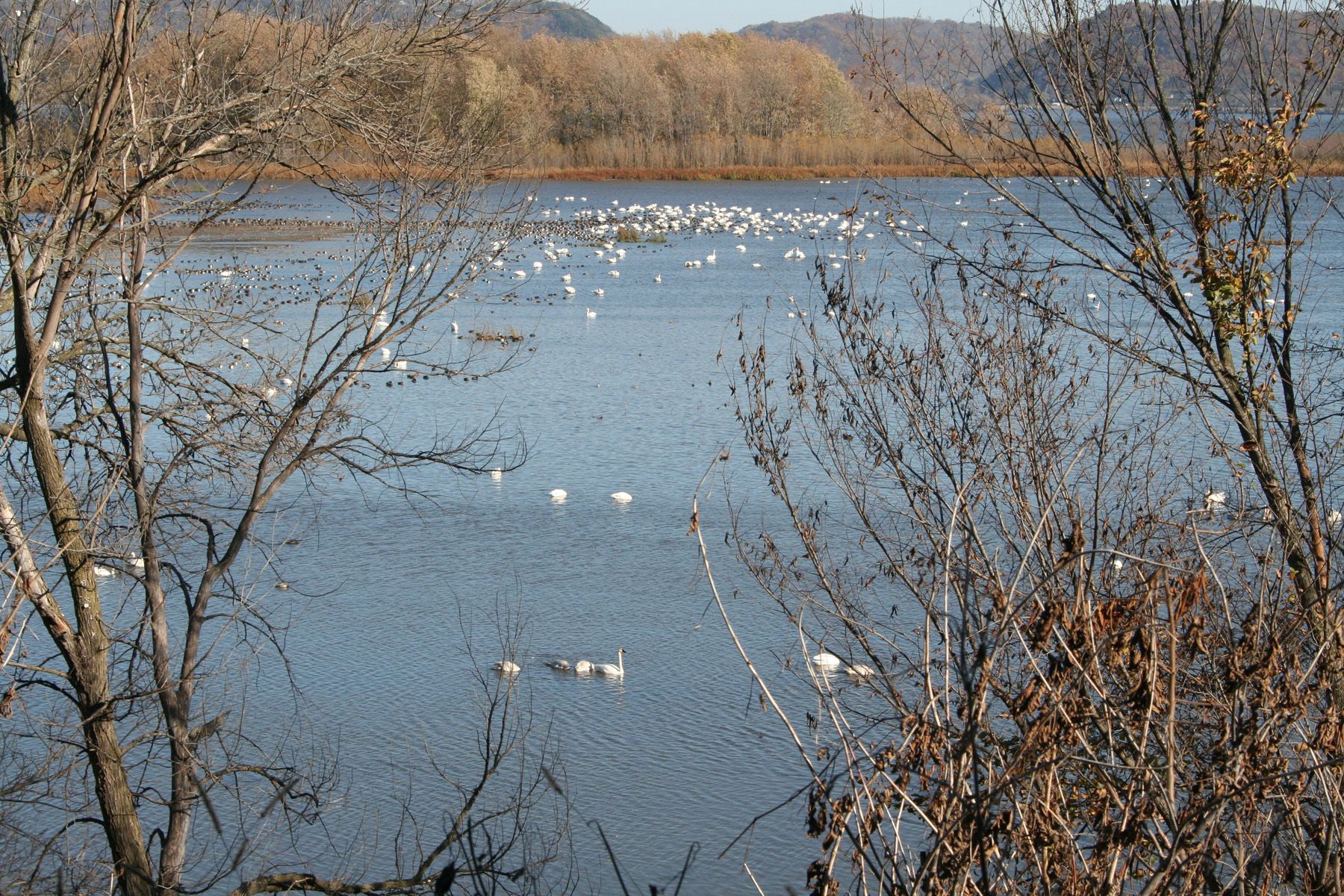
Tundra swans pass through as the ice breaks up in early spring, on their way to nesting grounds in the Arctic. Their larger gatherings come in late autumn, when big rafts of swans rest on the river's shallow pools, but spring can bring flocks too, along with ducks, geese and other waterfowl. Pullouts along US-61 and Wisconsin Highway 35 that look over backwater, and the trails at the wildlife refuges, are good places to scan with binoculars.
Watching well
Most of birding is patience. Walk slowly, stop often, and listen. Many warblers are found first by song, and a few minutes standing quietly at the edge of a clearing often shows you more than an hour of walking. Learn a few common songs before your trip and you will start picking birds out of the leaves.
- Stay on trails. Spring woods are full of nesting birds and wildflowers, and bluff slopes erode easily.
- Do not play recorded songs to draw birds out. It distracts them from feeding and defending territory at the time of year when they can least afford it.
- Give nests and resting waterbirds plenty of room. If a bird flushes or calls in alarm, back away.
- Keep well back from bluff edges, especially on wet mornings when rock and leaf litter are slick.
May mornings in the valley can be cold even when afternoons are warm. Bring a layer and a rain shell, waterproof shoes for wet grass, and insect repellent once the weather turns. Ticks are active in spring, so check yourself after walking through long grass or brush.
Planning a spring trip
If you can choose your dates, aim for the first three weeks of May and leave a little flexibility, since the weather decides when the birds move. Plan to be on the trail at sunrise, take a break in the middle of the day when activity slows, and spend late afternoon on the backwaters looking for pelicans and waterfowl. Weekdays are quieter than weekends at the popular parks.
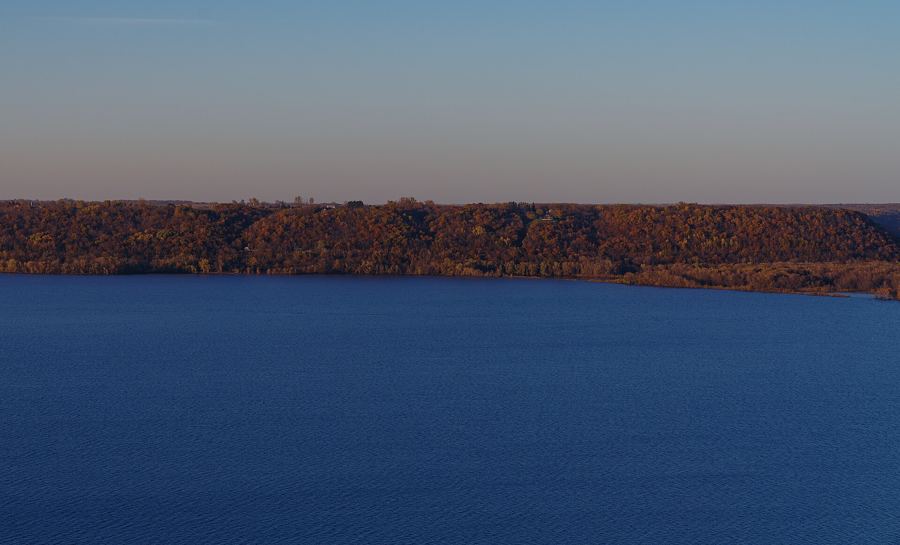
The same bluffs that fill with warblers in spring turn colour in autumn, when hawks ride the same valley south. Come once in each season and you will see the river as the birds do, a long green road running north and south.
Whose pictures these are
- Lorie ShaullCC BY 2.0
- Lorie Shaull from St Paul, United StatesCC BY-SA 2.0
- Melissa McMasters from Memphis, TN, United StatesCC BY 2.0
- USFWSmidwestPublic domain