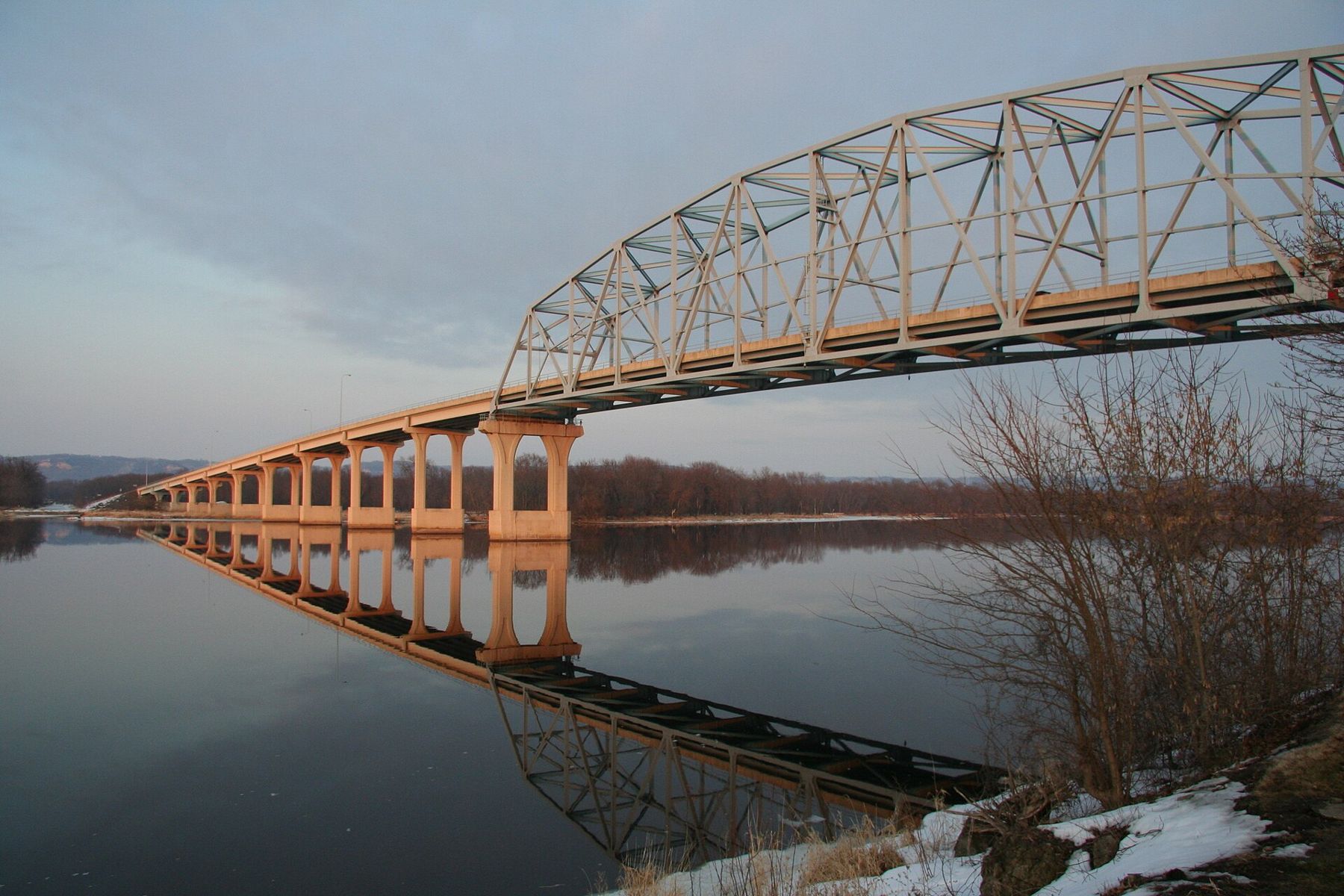
- Best months
- February, March, and October
- Getting there
- US-61 south from Lake City
- Bring
- Binoculars, warm layers and boots for snowy banks
Wabasha sits just below the foot of Lake Pepin, where the wide water narrows back into a river. It is a small town with a long history, one of the oldest settlements in Minnesota, and it takes its name from a line of Mdewakanton Dakota leaders called Wapasha, whose people lived along this part of the river. For most of the year it is a quiet river town with a good Main Street. In late winter it becomes one of the best places in the country to see wild bald eagles.
Why the eagles come
Bald eagles need open water to fish, and in a Minnesota winter most lakes and much of the river freeze solid. Below Lake Pepin, the current from the lake's outlet and the inflow of the Chippewa River from Wisconsin keep stretches of the Mississippi open even in hard cold. Eagles from across the north gather there, perching in the big cottonwoods along the banks and dropping onto the water to snatch fish.
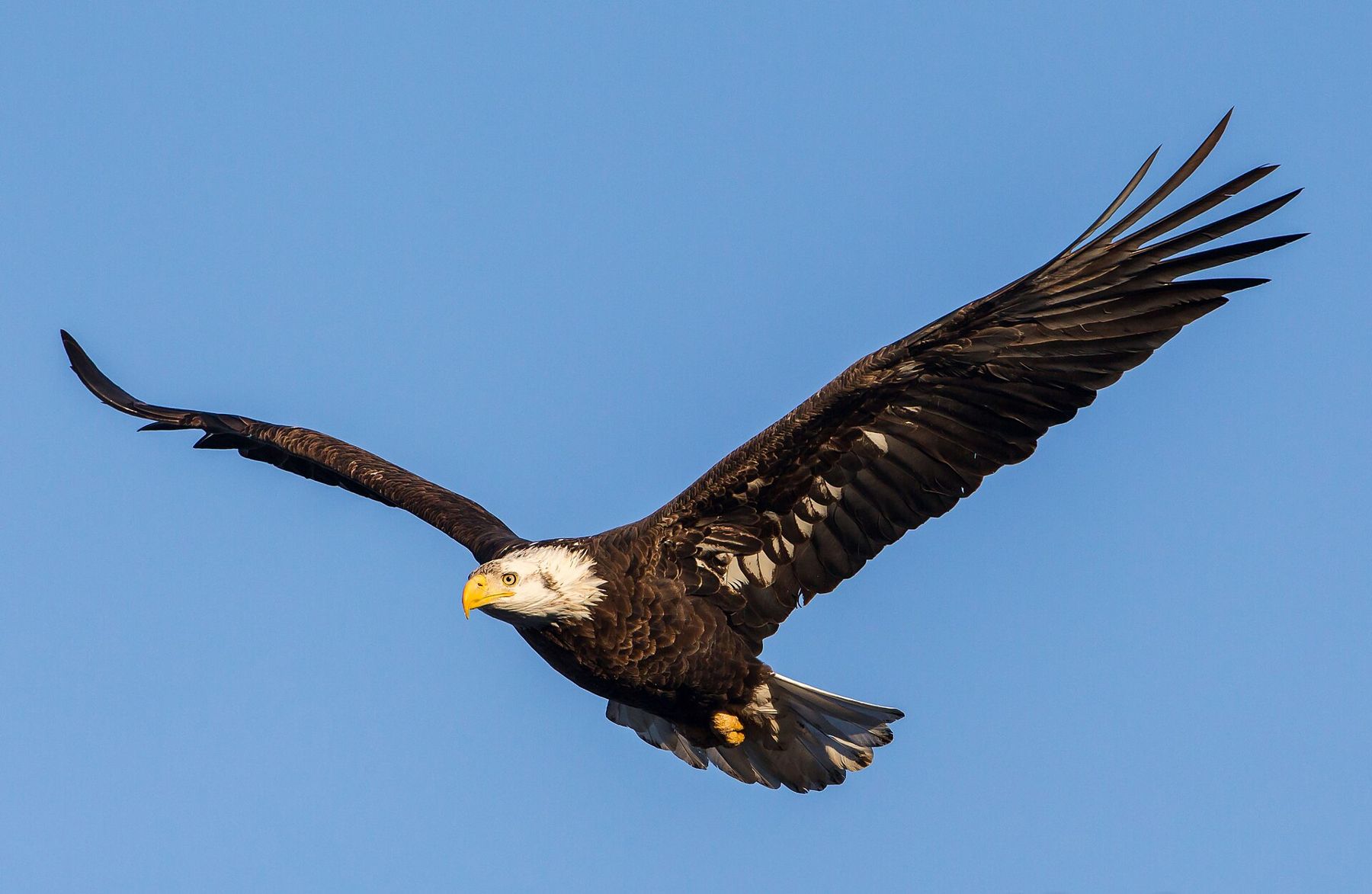
The numbers build through the winter and usually peak in late February and March, as birds from further north move through on their way back to nesting grounds. On a good day you can see dozens of eagles from the riverfront in town, sitting in the bare trees, soaring over the channel or squabbling over a fish on the ice edge. Adults, with their white heads and tails, are easy to pick out; the younger birds are mottled brown and take a second look.
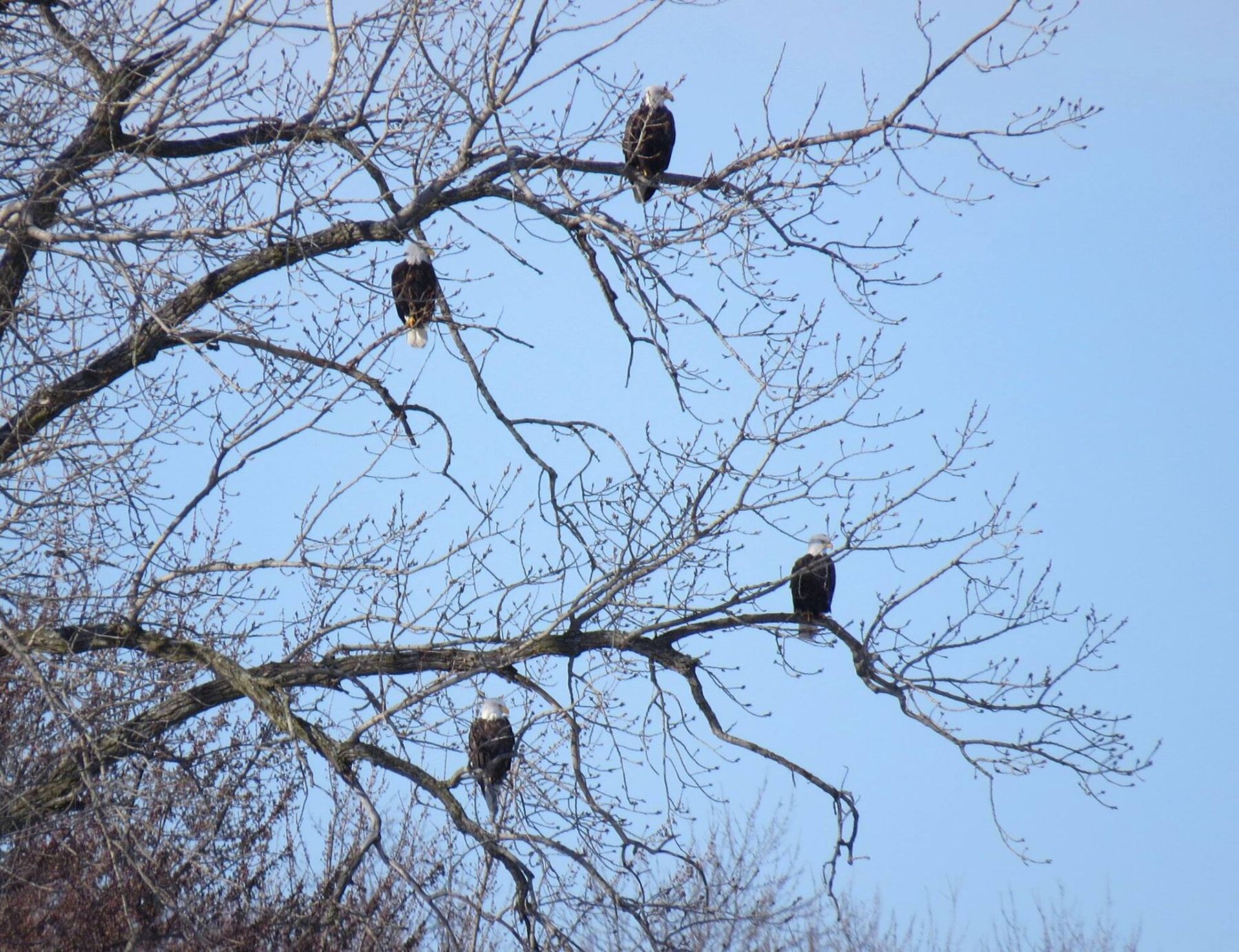
Watch from a distance. Eagles burn precious energy every time they are flushed, and in winter that energy is hard to replace. Stay on the bank, use binoculars or a spotting scope, and keep your car as a blind where you can. Our piece on eagles on open water has more on watching well.
The National Eagle Center
On the riverfront downtown, the National Eagle Center is a museum and education centre devoted to the bald eagle and its golden cousin. It cares for eagles that cannot be released into the wild, and you can see them up close while staff talk about their lives, their recovery from near-extinction and their place in Dakota culture. Big windows look out over the river, so on a winter visit you may see wild eagles outside while you learn about them inside.
The centre's programmes and hours change through the year, and admission has a fee, so check before you go. In late winter it runs special weekends built around the eagle season, which draw birders from across the Midwest.
Main Street
Wabasha's commercial street runs parallel to the river, a few blocks of red-brick buildings from the late nineteenth century. It is a historic district and still looks the part, with tall windows, decorative cornices and old painted signs on the side walls. The street has the everyday mix of a working small town, along with places that cater to visitors, and it is pleasant to walk end to end.
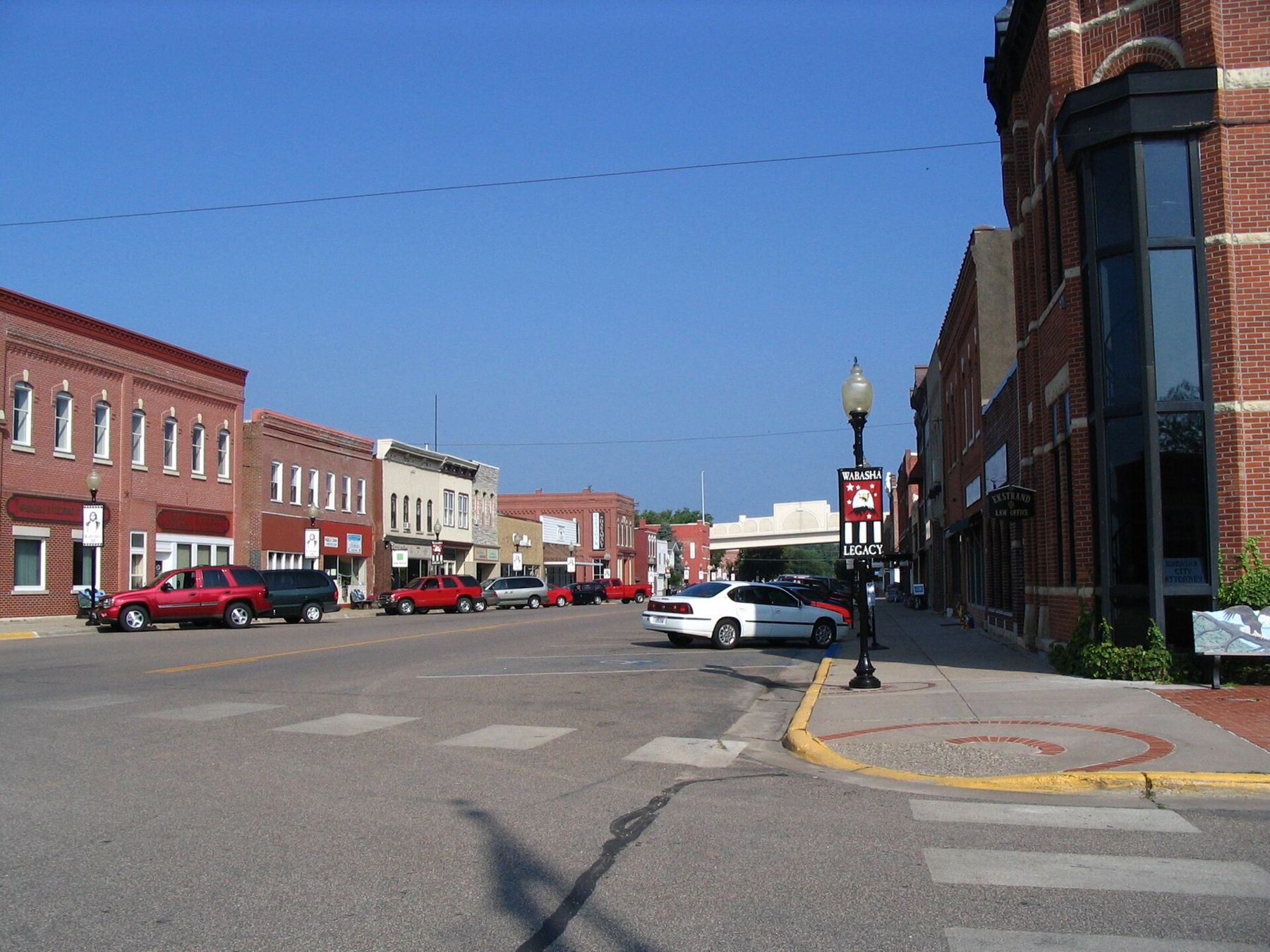
Look for the eagle banners on the lamp posts and the dated stones on the buildings. A few blocks back from the river, the old Wabasha County Jail, built in 1916, carries its name and date cut into the stone above the door.
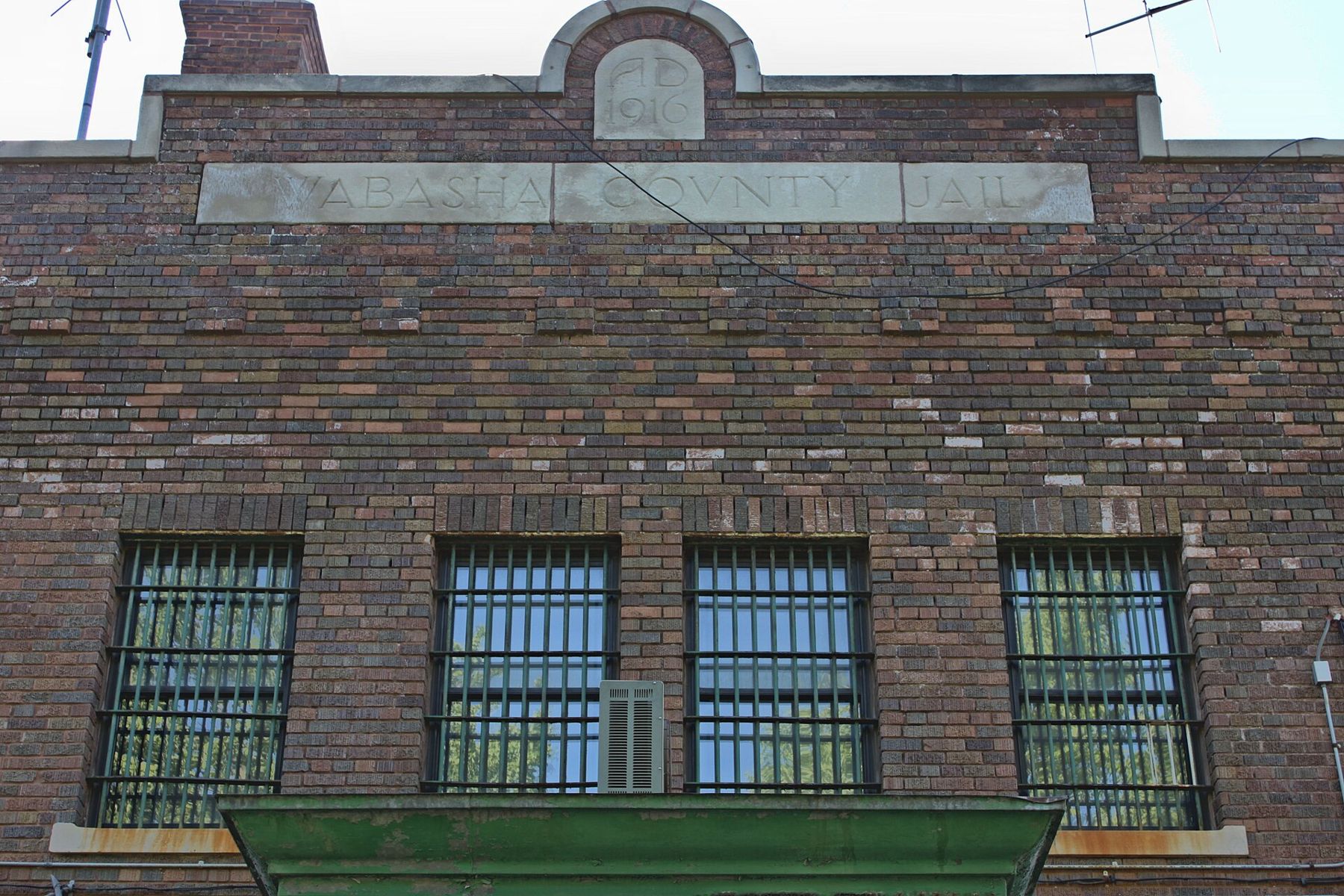
The town grew up as a river landing and trading post, and its oldest buildings date from the steamboat era, when Wabasha shipped grain and lumber and supplied the boats that called at its levee.
Film fans may know Wabasha as the setting of the 1990s comedies about two feuding old neighbours and their ice fishing shacks. The town has leaned into that a little, but it is not a theme park; it is a real place where people work, fish and run small businesses.
For most of the year it is a quiet river town with a good Main Street.
The river at the edge of town
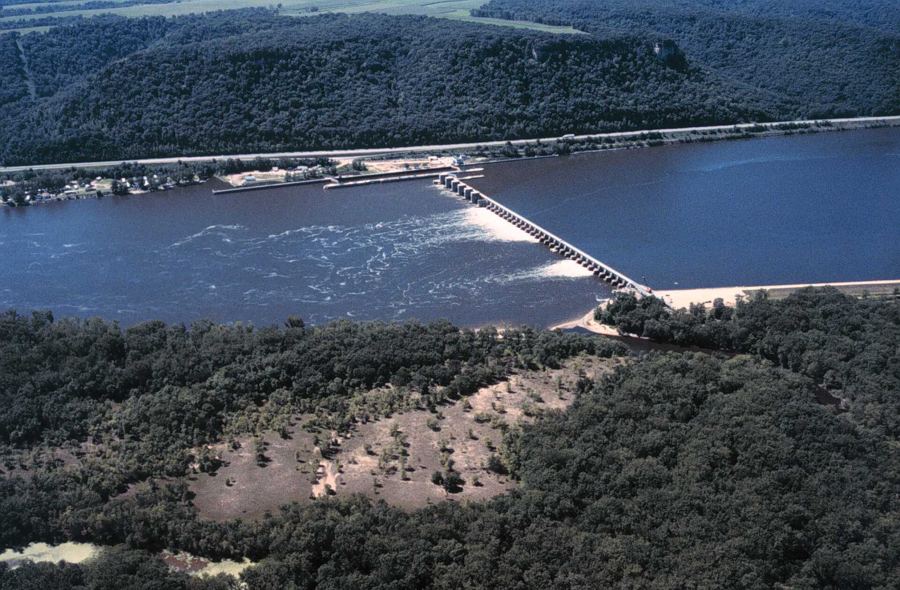 Further along the riverLocks, dams and barges
Wabasha is a river town in the most literal sense. The Mississippi runs past the end of every cross street, and the riverfront has parks and walkways where you can watch towboats and pleasure boats in the main channel. Just upriver, Reads Landing marks the foot of Lake Pepin, where the river leaves the lake. Downriver, the Upper Mississippi River National Wildlife and Fish Refuge begins and stretches for hundreds of miles of islands, sloughs and marsh, open to the public for fishing, paddling, birding and hunting under refuge rules.
The backwaters are beautiful but they are still the Mississippi. The current is strong in the main channel, the water can rise quickly after rain upriver, and channels that look shallow can be deep. If you paddle, stay out of the main channel when you can, wear a life jacket and give big boats plenty of room. In winter, ice on the river is never to be trusted near Wabasha: the very currents that bring the eagles keep the ice thin and unpredictable. Follow official advice and stay off river ice.
Over the bridge to Nelson
The Wabasha–Nelson Bridge carries Minnesota Highway 60 over the main channel, and on the Wisconsin side the road continues as Highway 25 on a long causeway across the bottoms, a wide stretch of flooded forest and marsh. It is one of the most scenic short drives on the river, with water and trees on both sides and the Wisconsin bluffs rising ahead.
At the end of the causeway you reach Nelson, a small village at the foot of the bluffs where Highway 25 meets Highway 35. Turn south on 35 and the road leads to Alma, with its single long street between bluff and river and its lock and dam. Turn north and you follow the Wisconsin shore of Lake Pepin toward Pepin and Stockholm.
A loop works well: eagles at Wabasha in the morning, across the bridge, south on Highway 35 to Alma for the lock and dam and the bluff-top overlook, then back the same way or over the river further south. The full shape of these crossings is in our guide to the Great River Road on both banks.
When to come
For eagles, come between late January and March, on a cold, clear morning when the birds are active and the light is good. Dress for real cold: the wind off the open river cuts through thin layers, and you will be standing still. Bring boots for snowy banks, a thermos, and patience.
The rest of the year has its own rewards. Spring brings migrating ducks, pelicans and swans to the backwaters. Summer is for paddling the refuge and walking Main Street in the evening. October turns the bluffs on both banks gold and red, and the eagles start to drift back as the first ice forms upriver. Whenever you come, give yourself time to stand by the water and watch: Wabasha rewards people who slow down.
One last tip for eagle days. The birds are most active in the early morning, when they leave their night roosts in sheltered valleys and fly out to the river to feed. Arrive soon after sunrise, find a spot along the riverfront with a clear view of the open water and the trees on the far bank, and wait. Bring a field guide or a simple bird app on your phone if you like, but the eagles are easy: look for the big dark shapes with white heads, sitting very still, then dropping suddenly to the water. Count them if you want, and you will quickly lose track.
Whose pictures these are
- JonathunderCC BY-SA 3.0
- USFWSmidwestPublic domain
- Publichall at English WikipediaPublic domain
- Mazzmn at English WikipediaCC BY-SA 3.0