- Best months
- May, September, and October
- Getting there
- US-14 and US-61 from La Crosse
- Bring
- A bag for apples and a full tank
La Crescent sits on the Minnesota bank of the Mississippi at the southern end of the stretch of river this guide covers, facing the much bigger city of La Crosse across the water. It is a small town, mostly homes and a short commercial strip, but it has one thing that sets it apart: apples. The bluffs and ridges around La Crescent are covered in orchards, and the town calls itself the apple capital of Minnesota.
How apples came to La Crescent
Minnesota winters are hard on fruit trees, and in the nineteenth century many people doubted that apples could be grown here at all. La Crescent helped prove them wrong. Early growers planted orchards on the slopes above the river, where cold air drains away down the valleys on frosty nights and the trees are spared the worst of it. One of them, John S. Harris, became one of the state's best-known fruit growers, and others followed until the hills around town were lined with trees.
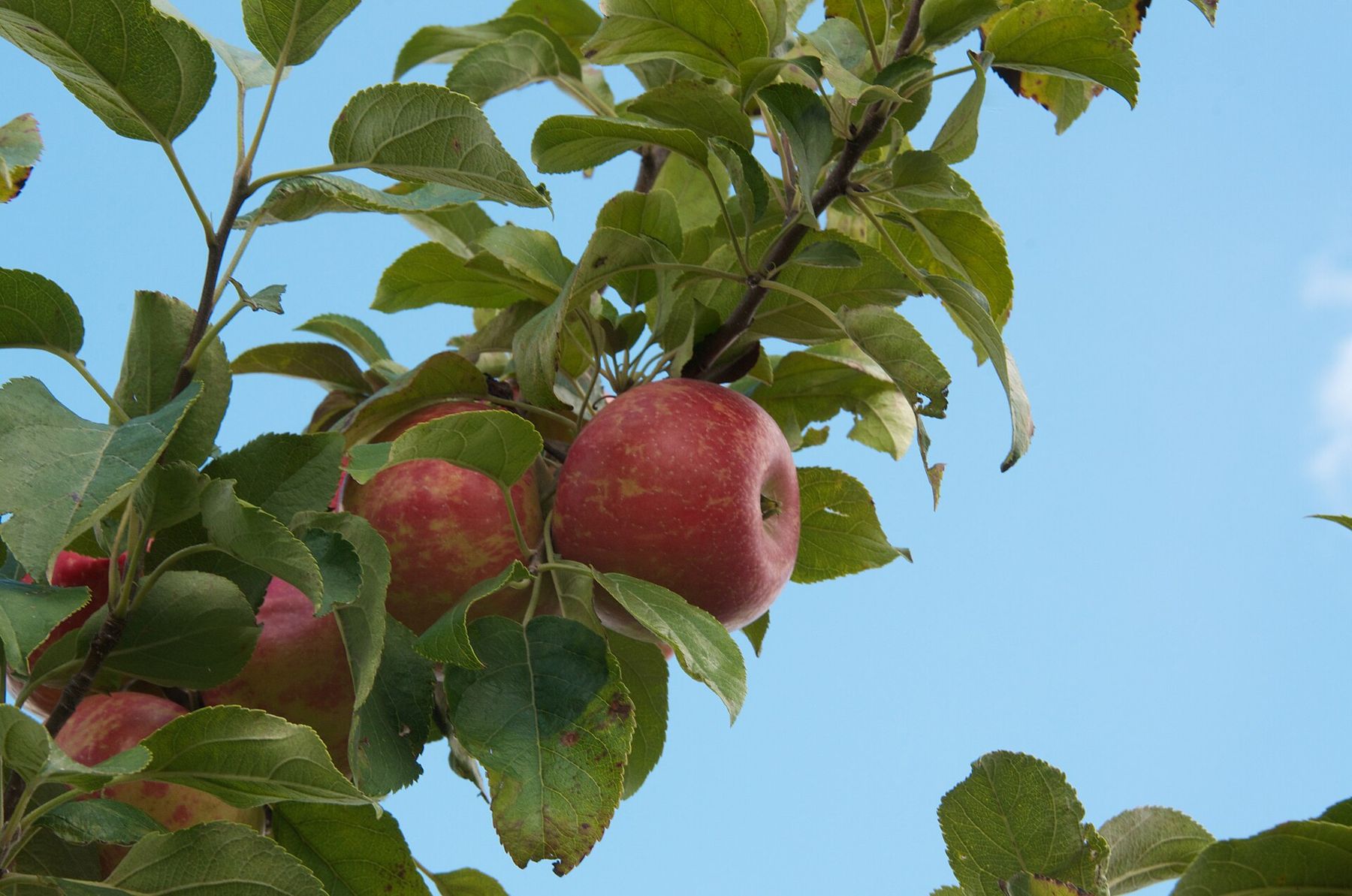
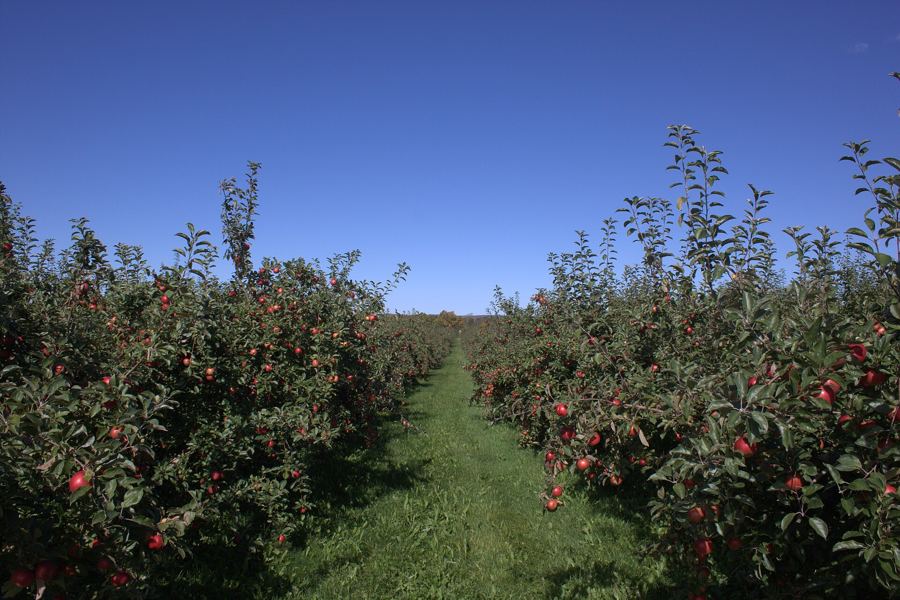
The orchards are still here, many of them family-run for generations. In spring they bloom white and pink across the ridges; in late summer and autumn they are busy with picking, and roadside stands and orchard shops sell apples, cider and pies. Each September the town holds Applefest, a festival with a parade and plenty of apples. Dates vary from year to year, so check before you plan around it.
The Apple Blossom Scenic Drive
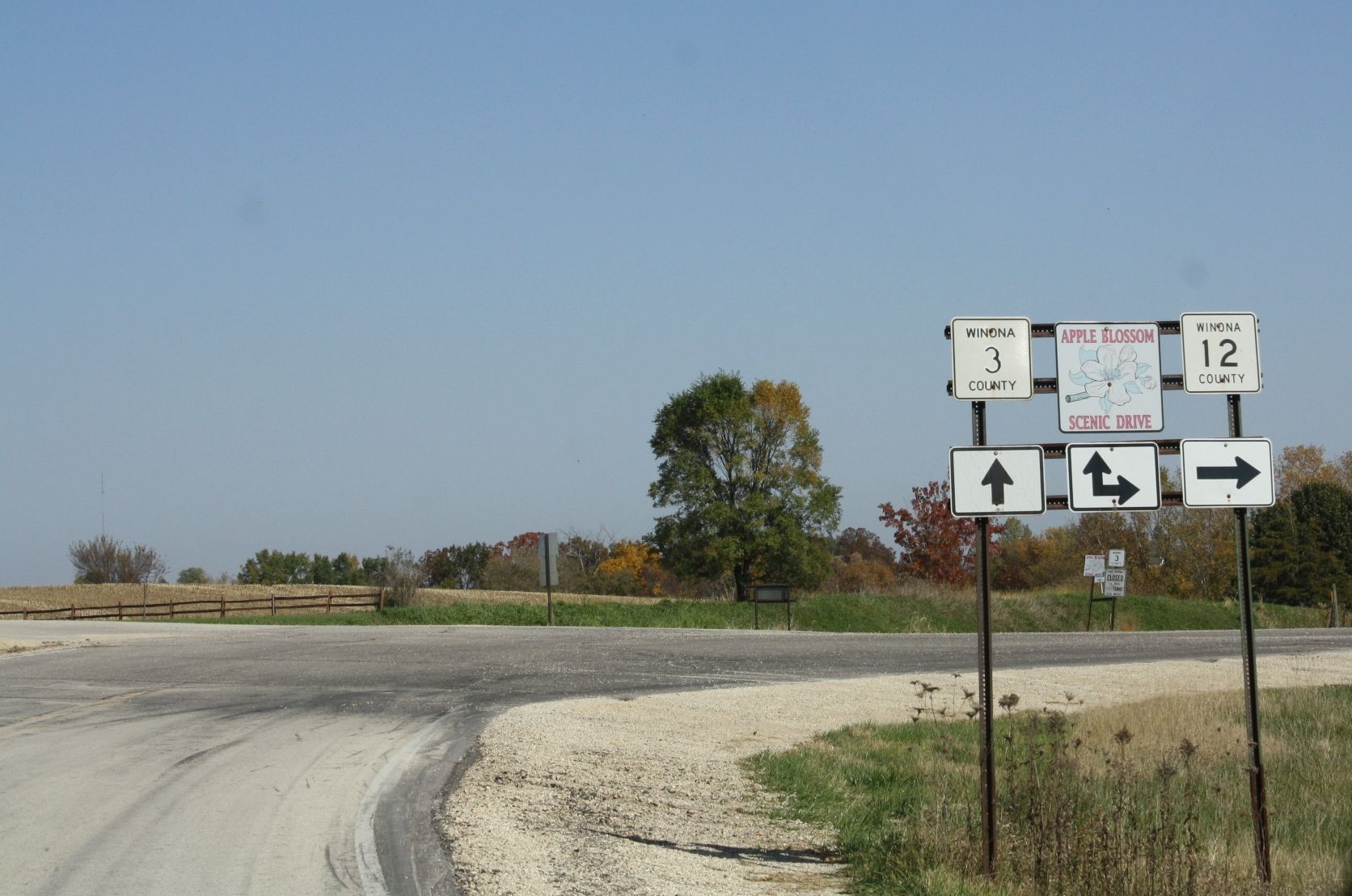
The Apple Blossom Scenic Drive is a route of county roads that climbs out of La Crescent onto the ridge tops north of town and runs along the high ground through orchards, farms and woods. It is marked with its own signs, a white apple blossom on a square board, and it is easy to follow from town.
The drive rewards slowness. The road winds along the ridges, and every few minutes it reaches an opening where the land falls away and you see down into the valley of the Mississippi, the river braided with islands below and the Wisconsin bluffs beyond. In between, you pass orchards in neat rows, red barns, cornfields and patches of oak woods. There are places to pull over, but the road is narrow and has farm traffic, so stop only where there is room.
The route links with roads leading north toward Great River Bluffs State Park, which sits on high bluffs above the river near Interstate 90. The park has trails along the bluff edge with long views up and down the valley, and it makes a good destination or turning point for the drive.
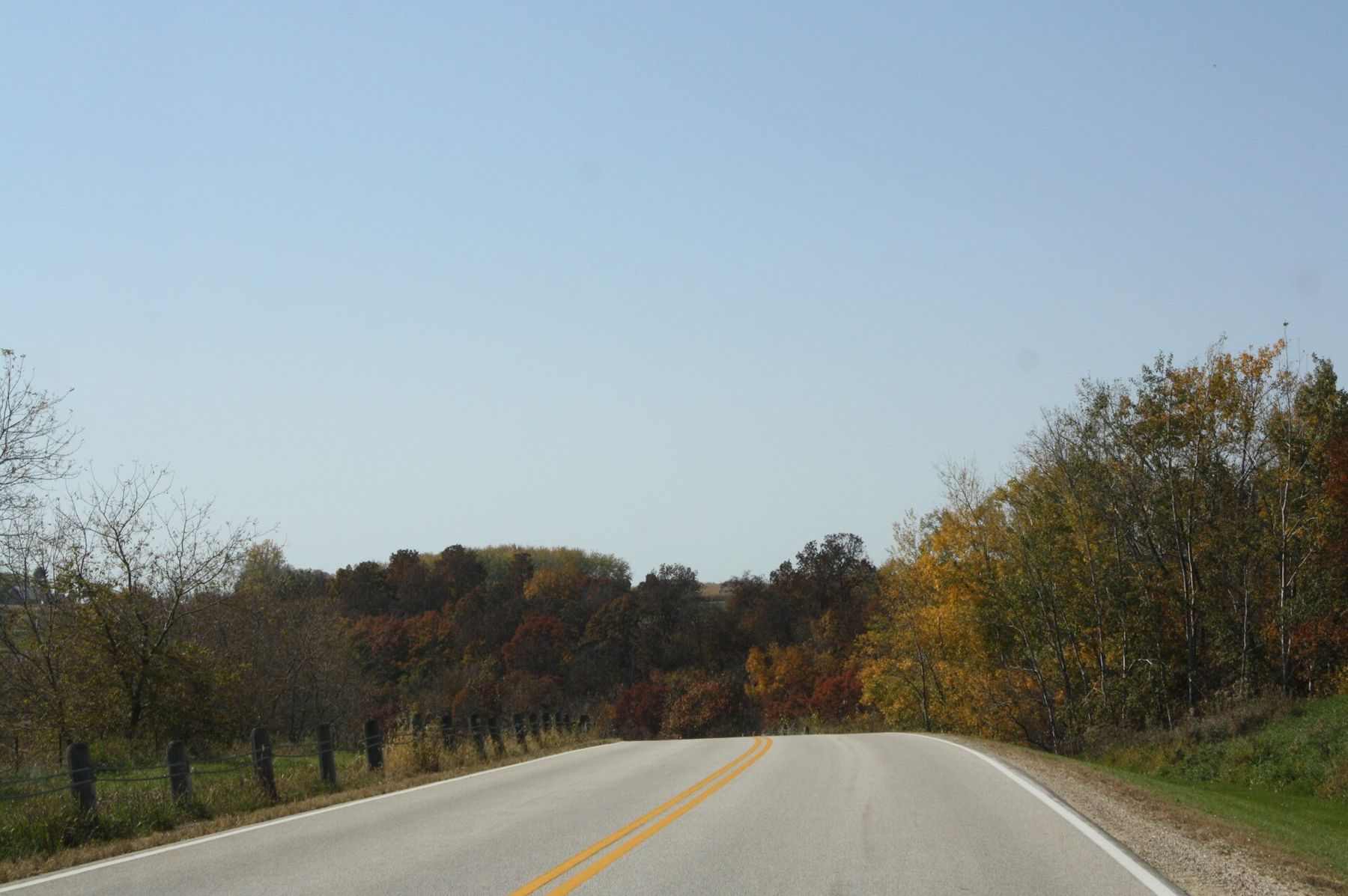
The drive rewards slowness.
Blossom time and harvest
 Further along the riverOrchards and cider on both banks
There are two best times to make the drive. The first is in May, when the orchards are in blossom. The timing depends on the spring, and the blossoms last only a short while, so watch the weather and be ready to go on short notice. The trees turn the ridges white and pink, bees hum in the rows, and the air smells sweet on a warm afternoon.
The second is from September into October, when the apples are ripe and the woods on the bluffs start to turn. That is when the orchard shops are busiest, and it is the time to buy apples by the bag. Minnesota has a long tradition of breeding cold-hardy apples, and you will see many varieties developed in the state on sale, from crisp early apples in late summer to keepers that store into winter. Some orchards let you pick your own; others sell what they have picked. Prices, seasons and what is available change, so call ahead or check before you drive out. Our story on orchards and cider has more on the apple country around La Crescent and Lake Pepin.
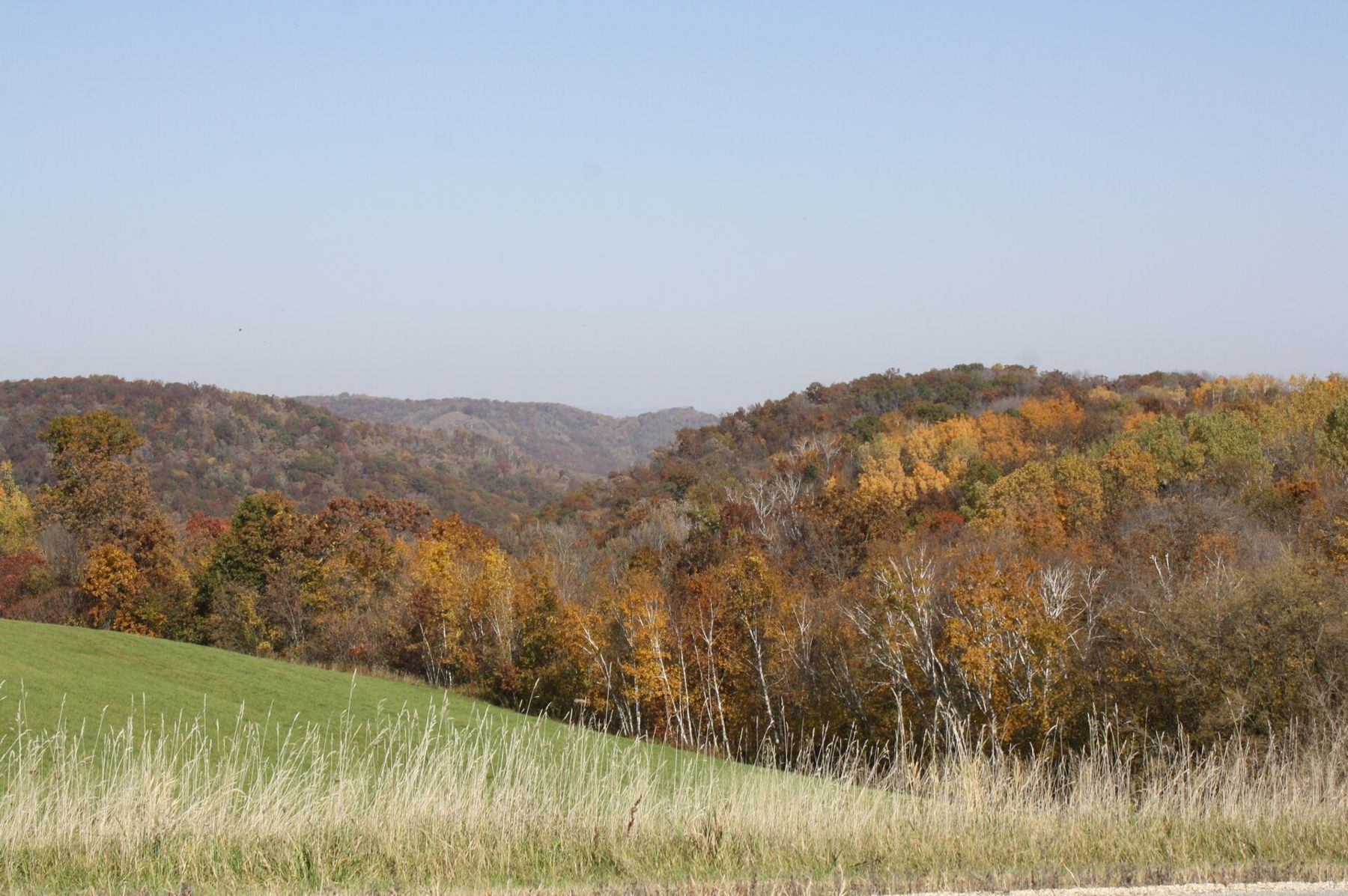
Autumn colour on the ridges usually peaks in October, with oaks going deep red and maples orange and gold along the drive. On a clear weekday, with the road nearly empty and the valley hazy below, it is one of the finest drives on either bank of the river.
The view over La Crosse
La Crescent's position gives it one of the best views of any town on the river. From the ridges above, you look across the Mississippi and its islands straight at La Crosse, with the city spread across the flat land by the river and the long face of Grandad Bluff rising behind it. On a clear evening, with the lights of the city coming on, it is a fine sight.
The best viewpoints come and go with the seasons, as leaves thicken in summer and fall away in autumn, but the higher stretches of the ridge roads give the widest views. Late afternoon is a good time, when the sun is behind you and lights up the city and the Wisconsin bluffs across the valley. On hazy summer days the view softens to layers of blue, one ridge behind another.
The town itself sits low on the riverbank, and from its edge you look across the backwaters toward the Wisconsin shore. The river here is wide and full of islands, sloughs and marshes, part of the Upper Mississippi River National Wildlife and Fish Refuge, and it is good country for paddling and birding. Treat it with respect: the current in the main channel is strong, the water rises after rain, and big boats throw wakes a long way.
Crossing to La Crosse
The bridges on US-14 and US-61 carry traffic across the Mississippi from La Crescent, by way of Barron Island and its park, into downtown La Crosse. Within minutes you go from apple country to a lively small city with a riverfront park, a historic downtown and a university.
The obvious next stop is the top of Grandad Bluff, the high point above La Crosse, where an overlook looks back across the river at the Minnesota bluffs you just left. Our guide to La Crosse and Grandad Bluff covers the city, the bluff and the river junction there.
A good day in this corner of the river runs like this: the Apple Blossom Scenic Drive in the morning, a stop at an orchard for apples and cider, across the river to La Crosse for lunch, and up Grandad Bluff for the late afternoon light. From the top you can pick out La Crescent across the water, and the ridges where you started the day.
Practical notes
The scenic drive is on public roads and costs nothing to follow, but it has no services, so fill your tank and bring water before you start. Some roads on the route are steep and winding; go slowly, watch for farm machinery and cyclists, and stop only where it is safe. Great River Bluffs State Park requires a state park vehicle permit, and its seasons and facilities change, so check before you go.
Orchard hours, festival dates and what is in season all vary from year to year, so plan with up-to-date information. And if you come in blossom time, be flexible: a warm week can bring the trees into flower quickly, and a cold snap can hold them back.
Whose pictures these are
- RoyalbroilCC BY-SA 3.0
- Pete MarkhamCC BY-SA 2.0